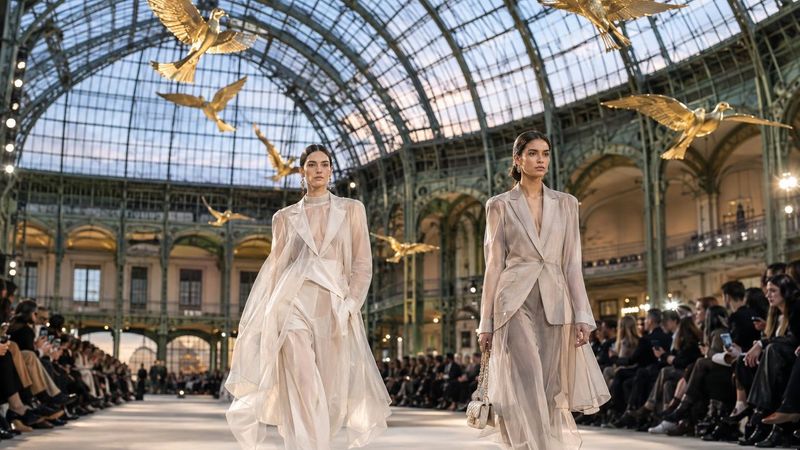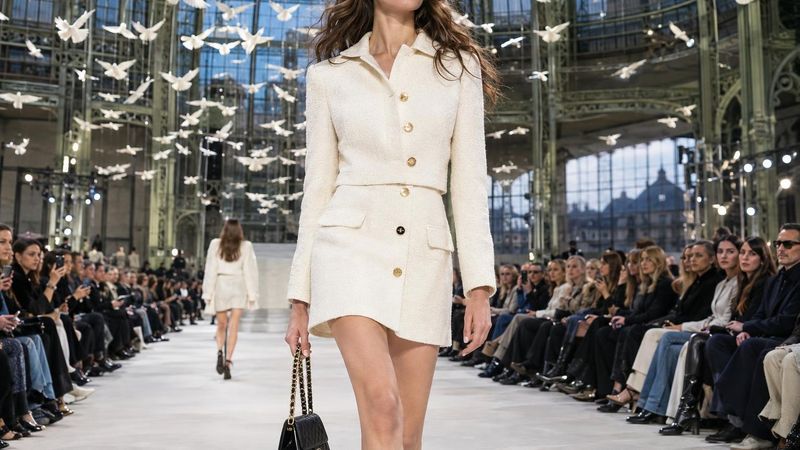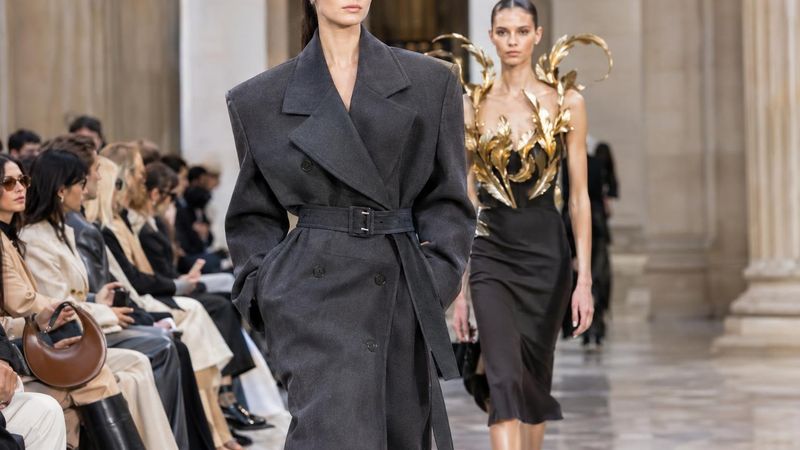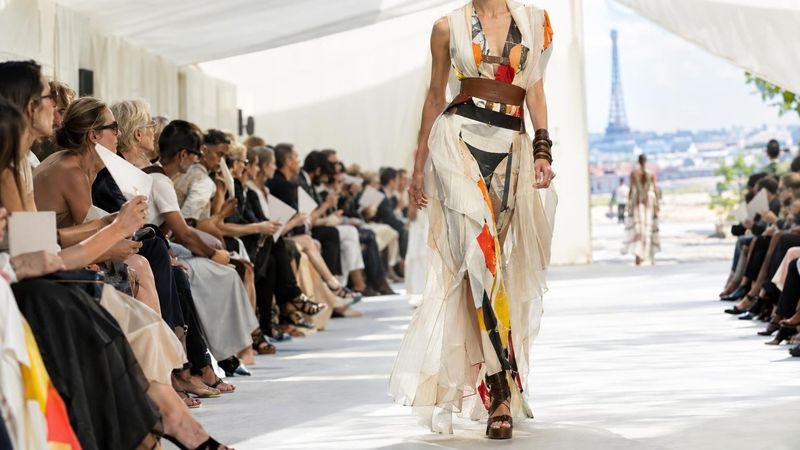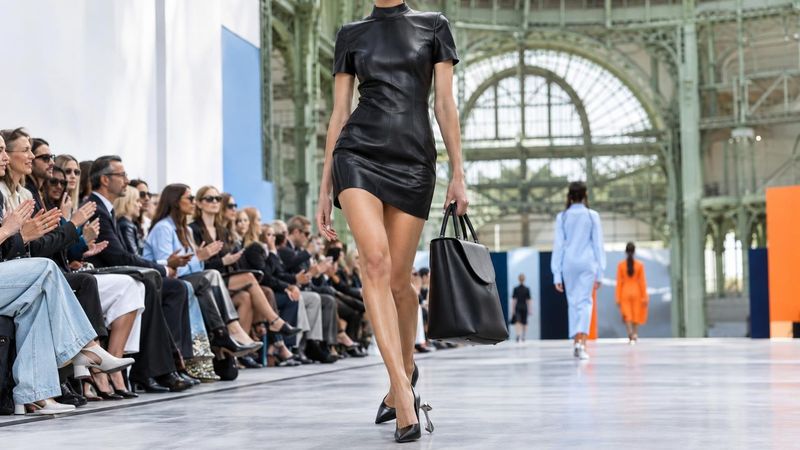
Christopher Kane returned to the London Fashion Week schedule on Sunday with his debut collection for Mulberry, a show that packed the Queen Elizabeth II Centre and ended in a standing ovation. The Spring 2027 ready-to-wear outing, titled City, Town, Country, marked two comebacks at once: Kane’s first runway appearance since closing his namesake label in 2023, and Mulberry’s first London show since 2017.
The stakes went well beyond a single season. Kane was appointed Mulberry’s creative director earlier this year by chief executive Andrea Baldo, the former Ganni executive leading a turnaround at the British leather goods house. The collection’s sharp leather tailoring and reworked accessories now carry the brand’s commercial hopes, and the room’s reaction suggested the gamble landed.
A Double Comeback for London Fashion Week
Mulberry’s absence from the London schedule stretched eight years, and the brand spent much of that stretch leaning on heritage bags while its ready-to-wear struggled for attention. Kane’s arrival was designed to change that. The show anchored a crowded day that also included Simone Rocha, Erdem, Roksanda and Alexander McQueen, and it drew a crowd of editors and buyers who treated it as the week’s hottest ticket.
“This has been a really pivotal and joyous moment for Mulberry,” Baldo said after the show. “Christopher’s vision really speaks to the codes of the house whilst moving the brand into a new era.” Kane was direct about his own return. “It feels so good to be back,” he said before the show.
The Bayswater Flap as Mulberry’s New Unseen Logo
Kane’s central design idea was a cut-out shaped like the flap of Mulberry’s Bayswater bag, repeated across leather minidresses, skirt suits, anoraks, jacket lapels and coats. He described it backstage as an “unseen logo,” a design detail that signals the brand without a visible stamp.
The palette opened in cleansing grey and white drawn from Kane’s Scottish industrial hometown, then moved through baby blue, neon orange, beige, burgundy and black, with the house’s heritage check revived on floaty shirts and PVC trenches. Leather dominated, and Kane’s team bonded it to make it lighter and more breathable, an innovation aimed at making a leather dress plausible in spring.
Bags, Axe Heels, and a Split Verdict on Wearability
Accessories carried much of the message. A supersized Bayswater appeared in croc-effect black leather with a matching coat, joined by two new shapes: the asymmetrical axe bag and the smaller, curved chop bag. Both nod to the collection’s tree-surgeon theme, the idea of cutting a mulberry tree back so it grows. Pointy court shoes and loafers came with a metal heel shaped like an axe.
Reactions split along familiar lines. Editor Osman Ahmed called it “the show of the season,” while WWD’s review argued the stiff leather dresses and hard-edged bags felt out of step with a market now moving toward color and ease. Models on the runway offered a different read. Tess McMillan described the collection as “brilliantly sharp but with such an imaginative essence,” pointing to silhouettes that paired heavy structure with real fluidity.
For casting directors and new faces, the show also set a clear reference point: graphic, precise, slightly subcultural, with school-uniform and football-casual nods folded into luxury leather. Kane’s own summary of the woman he has in mind was simpler. “The tone is set now,” he said backstage. “She’s cool, she’s modern. But she’s also got that country in her.”