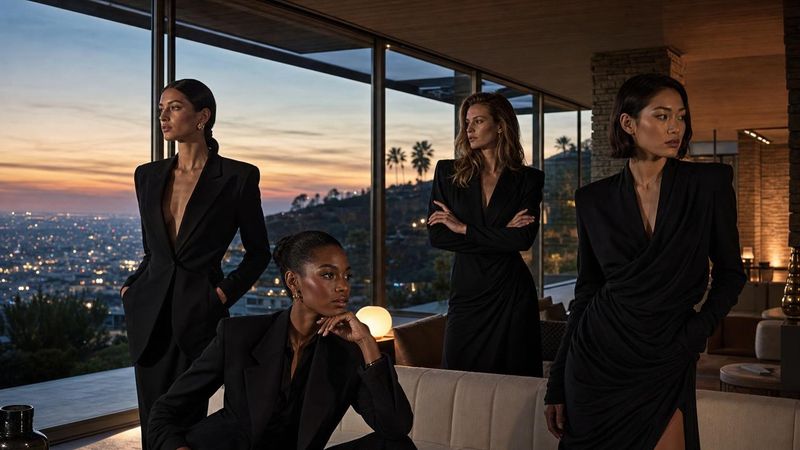
Balmain’s Fall Winter 2026 season under creative director Antonin Tron is built around a very clear image: the neo noir heroine. From the Paris runway to the campaign “L’heure du loup”, everything is staged as if the models were leading characters in a movie rather than anonymous faces in a lineup.
That choice does more than set a mood. It changes how the house casts its runway, how models are directed on set and how the story of the collection lives across images and social video. For anyone interested in modeling or representing brands, Balmain FW26 is a sharp example of what happens when fashion fully embraces cinema.
Antonin Tron’s Balmain reset: from couture heritage to neo noir heroines
Balmain has been associated with structured glamour since Pierre Balmain founded the house in Paris in 1945, helping define the postwar “New French Style”. When Antonin Tron took over as creative director in late 2025, his first Fall Winter collection had to acknowledge that heritage and still feel like a new beginning. He anchored his debut in the vocabulary of film noir from the 1940s and its 1980s neo noir revival: sharp shoulders, precise tailoring, black leather, slinky dresses that move like liquid in low light.
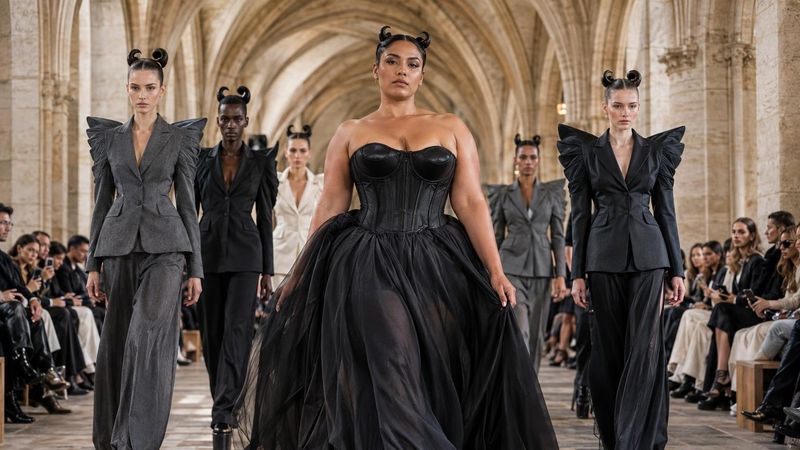
The official collection text speaks of dark elegance and the sensuality of strength, which fits the heroine archetype Tron seems to favor. The Balmain woman here is not a background extra. She looks self-possessed, decisive, slightly enigmatic. Strong-shouldered aviator jackets, fil coupé dresses and impeccably draped blouses strip away ornament to focus on silhouette, attitude and gesture. That shift toward character is exactly where casting starts to matter.
A runway cast like a film: how FW26 changed the brief for models
The Fall Winter 2026 runway show at Paris Fashion Week was staged like a movie set. Scenography by architect Andrea Faraguna moved from a nocturnal landscape into a clearer, almost morning light, suggesting a story playing out over time rather than a static catwalk. Looks followed one another like scenes: leather and shadow first, then pieces in lighter tones that caught the new light differently.
Casting director Julia Lange had to populate that world with a believable “cast list”. For a neo noir brief, that means models who can project emotion without overacting: an intense, readable gaze, a way of holding the shoulders that matches those architectural jackets, a walk that feels like entering a frame, not just crossing a stage. Boards for this kind of show are built less around uniform beauty and more around energies that complement each other, like different characters sharing the same script. For models, that kind of casting asks for control of micro expressions and a walk that can adjust from cool detachment to quiet tension in a few steps.
“L’heure du loup”: when the Balmain Fall Winter 2026 campaign becomes a movie
A few months after the show, Tron’s first Balmain campaign, “L’heure du loup”, picks up the same story at a different hour. The title refers to the French expression “entre chien et loup”, the twilight moment when forms blur between day and night. Shot by photographer Suffo Moncloa in a mid century house by American architect John Lautner in Los Angeles, the campaign uses the building almost as another character. Its sharp angles, glass walls and dramatic levels echo the couture volumes of the clothes and classic neo noir interiors.
The images are conceived as film stills from an American movie: tightly framed, slightly off center, with models caught mid gesture rather than in neat poses. Abuk Yor, Stephanie Cook, Mariane Godoy and Katherine Wilkey appear as heroines of a wordless story, wearing leather aviator blazers, slit skirts, fil coupé dresses and fluid blouses that catch the light. Skin appears in controlled glimpses through a cutout, a slit, the line of an ankle, keeping the focus on suspense and suggestion instead of exposure. For the models involved, the job is closer to acting in a silent scene than simply holding a shape for a camera.
What this cinematic turn means for models, agencies and brand storytelling
Balmain Fall Winter 2026 sits inside a broader shift toward fashion shows and campaigns that feel like full narratives. When a house builds a season around a genre like neo noir, everyone involved adjusts. Casting directors look for faces that hold mystery, not just symmetry. Stylists and beauty teams design hair and makeup that can withstand close cinematic framing. Models are expected to understand the brief and modulate their presence to match it.
For working and aspiring models, this has practical consequences. Bookers increasingly need talent who can handle both runway and motion. Self tapes and test shoots are less about showing every angle in flat light and more about proving that you can carry a mood, hit marks, change expression on cue. Agencies responding to this kind of demand often update books and digitals with imagery that feels more like frames from a short film than static lookbook pages.
- Train your gaze and micro expressions, not just your walk. Practice holding eye contact with the camera and shifting emotion subtly.
- Build a portfolio with at least a few cinematic images and short motion clips that show you moving through space, not only posing.
- Learn to read a creative brief: if the reference is film noir or thriller, think about what that means for tempo, posture and attitude.
- Talk with your agent about the “characters” you naturally project on camera, so they can pitch you accurately for narrative heavy castings.
On the brand side, Balmain FW26 shows how a season can be storyboarded from runway to campaign to social media. The same heroine in a strong shouldered blazer walks the Paris show, appears in a twilight shot in a Lautner house and then lives again in a short clip on a phone screen. When casting, directing and styling all align with a clear cinematic reference, a collection does not just look coherent, it reads as a story the audience can follow. For models and creatives, understanding that language is becoming a core part of working at the top level.