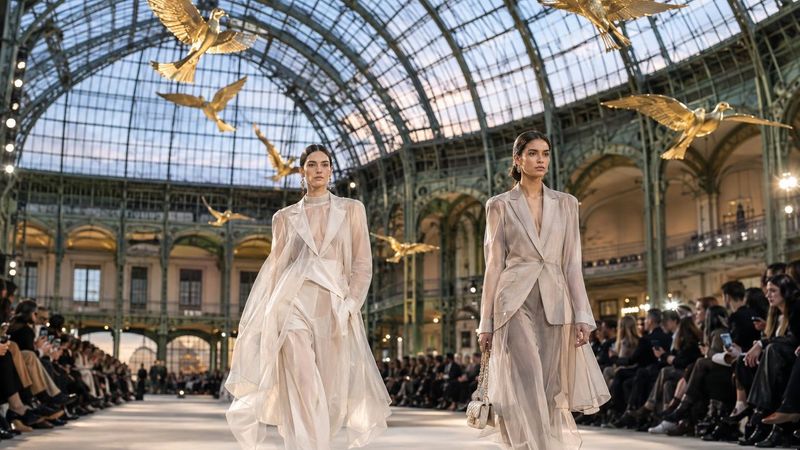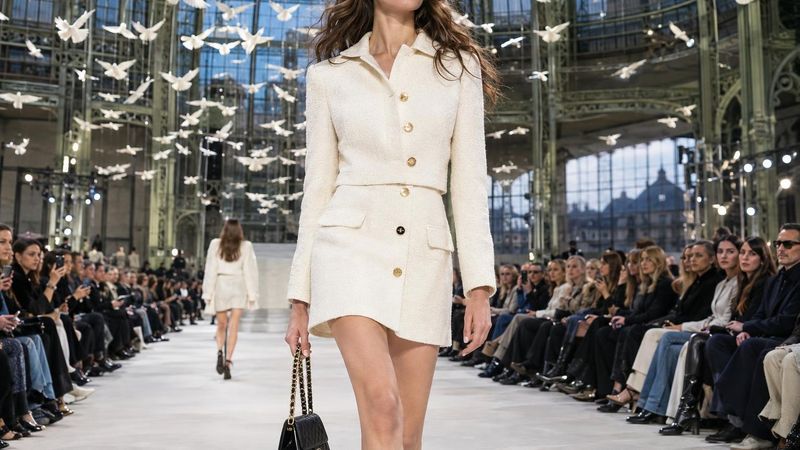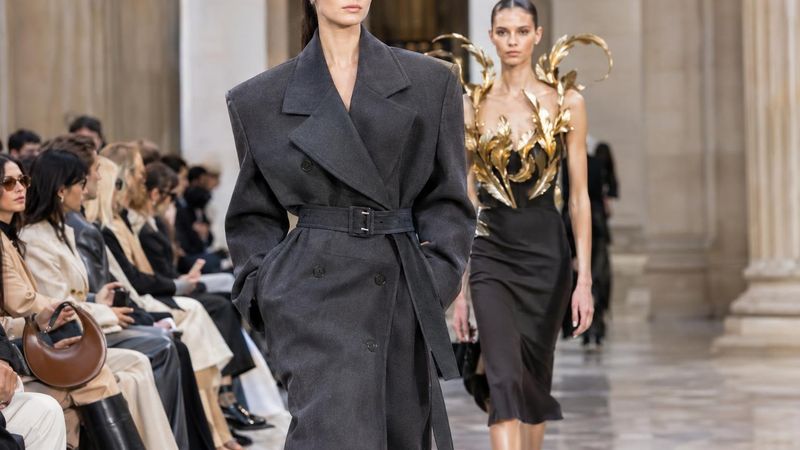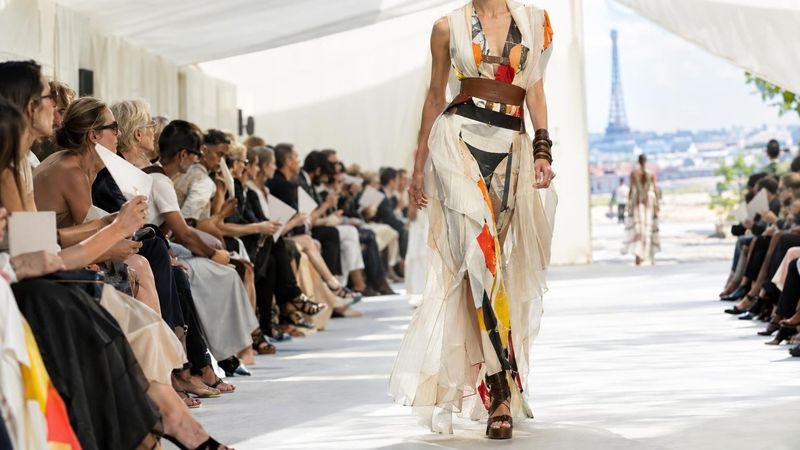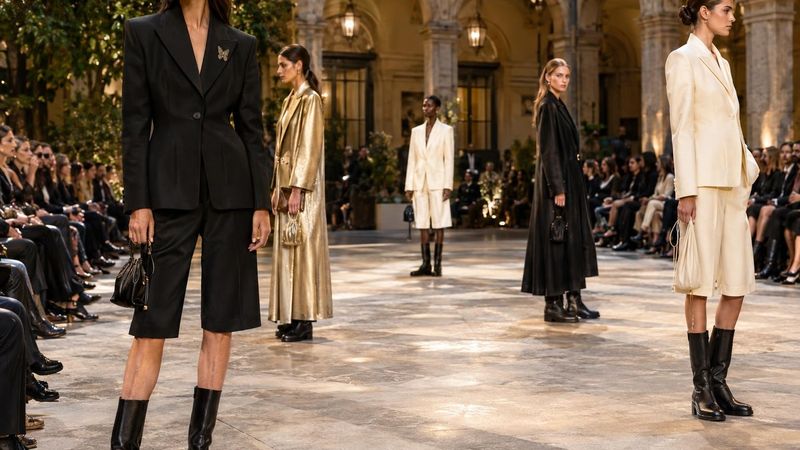
On September 27, 2026, in Milan, Giorgio Armani Spring 2027 Ready-to-Wear gave the house its first spring womenswear main line of the post-founder era, and the third runway collection designed by Silvana Armani, his niece and the head of the women’s line. The title, Evoluzione, sets the terms of the exercise: a wardrobe that reads instantly as Armani, adjusted in proportion, material, and palette rather than rebuilt.
That framing answers the question the house faces every season. How does a label built on nearly fifty years of continuity move forward without breaking what its customers recognize? The signals here point in two directions at once. The tailoring grows sharper and more deliberate, while the luxury codes beneath it grow louder, trading the discreet greige that defined Armani for decades for black, ivory, and gold. Together, those moves say most of what matters about the brand’s runway direction and its luxury positioning.
What Evoluzione Says About the Armani Method
In ancient Greek, the word psyché meant both soul and butterfly. The butterfly, an insect that changes form entirely while staying itself, appears across the collection as a graphic and embroidered motif, and it has become the season’s organizing image. The metaphor is less decorative than strategic. Armani is a house in the middle of a transformation it intends to survive intact.
The runway record supports that reading. Spring 2027 follows the fall/winter collection Silvana Armani presented in March 2026 and the Cruise 2027 show staged in June of that year in the courtyard of Palazzo Orsini. Across those three outings, the method has held steady: start from shapes the Armani customer already owns, then adjust length, weight, and finish. This show landed on September 27, near the close of a Milan Fashion Week that ran September 22 to 28, 2026.
Tailoring First: Longer Jackets, Sharper Shoulders
At Armani, the jacket has always carried the argument, and this season it grew longer and lighter. The cut stays borrowed from menswear, but the construction drops weight so the garment falls softly and follows movement instead of holding the body in place. Closer-fitting pieces alternate with it, drawing the silhouette without constraining it.
The shoulders are crisp again, and metallic hardware runs through the collection as a deliberate nod to the 1980s, the decade when Giorgio Armani’s tailoring became a global standard. On the runway, that combination produced tailored bermuda shorts under a jacket worn against the skin, suiting traced with optical motifs, and a high-gloss blazer with a lacquered, almost liquid shine. The direction is specific: power dressing rebuilt around ease instead of armor.
Cotton, Shine, and Neoprene in the Luxury Mix
Materials carried some of the strongest signals. Cotton entered the collection, widening the lineup toward daily life in a house that has traditionally leaned on more formal fibers. Alongside it came light-reflecting surfaces built to carry one look from the office into the evening, a day-to-night logic that luxury customers increasingly expect from a single purchase.
Shoes pushed the point further. Loafers and high-heeled sandals shared the runway with flat boots made of neoprene, the wetsuit material, inside the most luxurious line the house operates. Accessories stayed small, pouches and clutches meant to be carried in the hand rather than statement bags. Together, the material mix argues that luxury at Armani increasingly means touch, versatility, and construction rather than fragility or display.
From Greige to Black, Ivory, and Gold
For decades, Armani’s signature color was greige, the gray-beige middle ground the founder turned into a house code and the wider market later read as quiet luxury. Spring 2027 sets it aside for three clear tones: black, ivory, and gold. Black keeps the rigor of Armani tailoring, ivory lightens the collection, and gold, worked into metallic sheen and finishing, points toward a more explicit idea of luxury.
The change is easy to misread as a break with the past. It reads more like a return. The 1980s the collection keeps quoting, the era of power suits and disco, were also the years when Armani glamour was built on shine without logos. Here the polish lives in fabric and finish rather than branding, which keeps the house legible to its long-standing client while giving newer customers something visible to respond to.
The Atelier Walk and What It Signals Next
Presentation carried meaning too. Models arranged themselves along the perimeter of the runway and moved through the clothes the way ateliers once showed garments to clients, a format that puts the emphasis on fit and movement at close range rather than on a straight-line power walk. Silvana Armani took her bow after a teaser set in nighttime Milan, complete with a disco ball and sepia-toned archive imagery, but the staging itself kept attention on the clothing.
Several signals are concrete enough to track. The butterfly could travel into accessories, jewelry, and packaging as a new iconographic code. The black-and-gold axis gives the brand a visual identity that does not depend on logos, and the shoulders and sculptural heels look like signatures worth watching in seasons ahead. Within the group’s creative architecture, Silvana Armani and Leo Dell’Orco lead the Giorgio Armani first line while Dario Vitale oversees Emporio Armani and Giorgio Armani accessories, a structure that lets the top line evolve slowly while the second takes louder risks. Whether cotton, neoprene, and gold remain one collection’s experiments or become a lasting refresh of the house’s codes is the test the next few seasons will set.