Scroll through a red carpet gallery from the last few seasons and you start to spot a pattern. Celebrity after celebrity is turning up with a fringe cut so short it barely grazes mid-forehead. Micro-bangs, once an almost punk statement, are suddenly everywhere, from Paris Fashion Week to blockbuster press tours.
For working and aspiring models, that tiny strip of hair is a big decision. A micro-fringe can do for your face what a logo bag does for a look: instantly branded, instantly memorable. It is a high-risk cut, yet the same quality that feels risky in real life is exactly what can turn it into a casting-ready signature.
What micro-bangs really are, and why celebrities keep choosing them
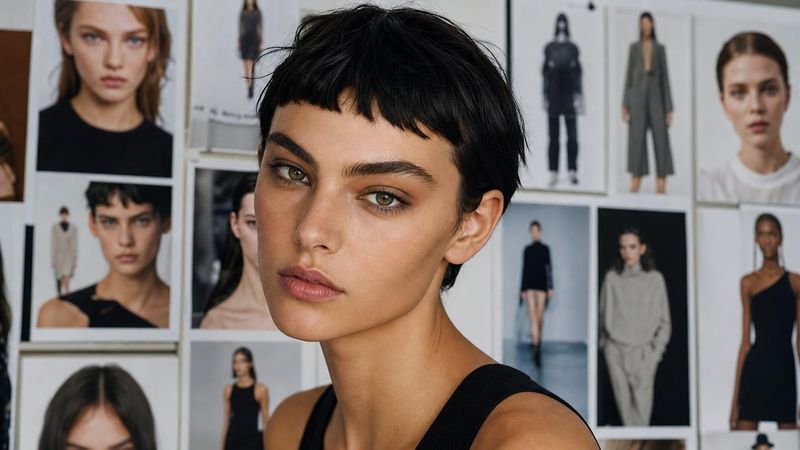
Micro-bangs, baby bangs, mini-fringe – different names, same idea. Stylists usually describe them as ultra-short bangs that sit clearly above the brows, often starting from the middle of the forehead and sitting about an inch or two down from the hairline. They leave the eyebrows completely exposed and carve a strong horizontal line across the face.
That placement changes everything on camera. With no hair curtain skimming your eyes, the entire upper third of the face opens up. Brows, eye shape, and forehead bone structure read more clearly in a beauty close-up, in digitals, even in tiny casting thumbnails.
Micro-bangs are not new. Audrey Hepburn’s cropped fringe in Sabrina, Bettie Page’s pin-up bangs, flapper-era kiss curls, Winona Ryder in the 90s, Rooney Mara’s severe micro-fringe on red carpets – the look keeps cycling back whenever fashion wants faces that feel sharp and intentional. What feels different in the late 2020s is scale. A “bang boom” has pushed fringe of every kind into the mainstream, and baby bangs are now pitched as the cut of the season in more than one market.
Hair pros describe exactly what makes them so addictive. One celebrity stylist calls micro-bangs “edgy, chic, and playful” and says people are drawn to how confidently they frame the face. Another explains that baby bangs “will always be a winner on the right face” because they make the wearer look like someone with a point of view before she even speaks. Others talk about the way this mini-fringe can “revolutionize” a look, adding freshness, a hint of rebellion, and a younger feel without changing the overall length of the hair.
Recent celebrity examples show how flexible that can be. Zendaya has worn razor-cut micro-bangs on a superhero press tour. Zoë Kravitz debuted wispy baby bangs at a Saint Laurent show in Paris. Ayo Edebiri, Kristen Stewart, Tracee Ellis Ross, Úrsula Corberó, Teyana Taylor – across very different personal styles, the same short fringe reads as deliberate and fashion fluent.
How a micro-fringe reads in castings, and who it suits
On a casting wall full of blow-dry waves and middle parts, a micro-bang face is hard to forget. That narrow strip of hair creates a graphic element that almost behaves like eyeliner: it directs the eye straight to the gaze. Casting directors for editorial and beauty often look for that kind of built-in drama, especially when they need a model who looks recognisable from image to image.
That drama comes with trade-offs. A micro-fringe rarely reads as neutral. Even when you style it softly, it suggests edge, artiness, or retro glamour. That is gold for high fashion, directional ready-to-wear, beauty, hair campaigns, or indie brands. It can be limiting in very conservative commercial markets that prefer hair they can restyle into anything.
Technically, the cut is more democratic than it looks. Stylists often highlight round and oval face shapes as especially flattered, since the short line visually lifts features and can slim the mid-face. Straight and slightly wavy textures are the easiest base. Curly micro-bangs are very possible and incredibly striking – Odessa A’zion and Tracee Ellis Ross prove it – but they need more discipline: a mini iron or careful product choice, and usually a silk scarf at night to hold the shape.
Two things matter a lot for models considering the change. First, the hairline. If you have a strong cowlick at the front, micro-bangs will want to stick up or separate unless you style them from wet every time. Second, the skin. Because this fringe sits so close to the forehead, very oily skin can make it look separated or stringy faster, which means more blotting and light-touch product on shoot days.
Maintenance is its own chapter. Fringe grows faster than most of the cut, so a true micro length can shift in as little as two weeks. Many stylists recommend trims every two to three weeks, or at least monthly, if you want to keep the bangs hovering well above the brow. The upside for a model is that you can treat it as a short “micro era” in your book. You might shoot one season with a strong mini-fringe, then let it grow into a softer short bang without having to change the rest of your look.
Because that era sits inside your career, it is worth looping your agency in first. A quick conversation with your booker or mother agent about your market, your main clients, and the timing of options will tell you whether this is the moment to go all in, or if the smarter move is to test the vibe with faux bangs on a few shoots before you commit.
11 celebrity micro-bang archetypes that feel casting-ready
1. Razor-cut futurist (Zendaya)
Super short, skimming mid-forehead with a clean, razor-cut edge that hugs the head. Works for sci-fi tinged campaigns, sharp beauty stories, and anything that leans architectural in styling.
2. Wispy French-girl fringe (Zoë Kravitz)
Fanned-out, almost see-through pieces scattered across the forehead. Feels effortless and cool, perfect for Saint Laurent style editorials, indie labels, and music-adjacent imagery.
3. Rounded bob micro-bang (Ayo Edebiri)
A curved mini-fringe echoing the round shape of a bob. Adds instant volume and personality to hair campaigns, haircare ads, and clean, modern fashion lookbooks.
4. Audrey-coded classic
Think Audrey Hepburn filtered through Emily Ratajkowski or Cara Delevingne: short, slightly choppy fringe with soft waves or a half-up style. Ideal for fragrance, jewellery, and retro glamour beauty close-ups.
5. Blunt, bold strip (Megan Fox, Lady Gaga)
Dense, pin-straight bangs cut in a strict line. The result feels graphic and high drama, great for dark eveningwear, bold beauty, or campaigns that want a strong, almost cartoon-clear outline of the face.
6. Choppy rock fringe (Miley Cyrus, Kristen Stewart)
Uneven ends, visible texture, often paired with a slicked-back pony or messy updo. Delivers relaxed rock energy for denim, leather, festival edits, and youth-focused brands.
7. Curly micro-bangs (Tracee Ellis Ross, Odessa A’zion)
Short curls brushed or defined to sit above the brow, framing the eyes. A standout choice for textured hair stories, inclusive beauty campaigns, and any editorial that wants personality over polish.
8. Minimalist noir fringe (Rooney Mara)
Narrow, ultra-short, and perfectly straight, often paired with a sleek bun. Reads severe and sculptural, ideal for directional runway editorials and high-concept beauty.
9. Full, rounded micro-fringe (Cara Delevingne)
Short but thick and slightly domed, with volume at the root. Balances edge with softness and suits luxury hair, mascara, or brow campaigns where the upper face has to carry the frame.
10. Long, blurred micro-bangs (Ella Purnell, Chase Sui Wonders)
Still above the brow, but with a textured, feathered edge and a touch more length. A gentler entry point for models who want the statement without locking themselves into the shortest version.
11. Faux micro-bangs and wigs (Beyoncé, Emma Roberts, many others)
Clip-in pieces or wig fronts cut into a mini-fringe. Perfect for testing the look in editorials, hair tests, or a single campaign, while your real hair stays book-friendly underneath.
Used thoughtfully, each of these versions can shift how a client reads your face before you even move. The key is choosing the micro-bang that matches the kind of stories you want to tell in front of the camera, then timing your micro era so it supports, not fights, the way your career is growing.