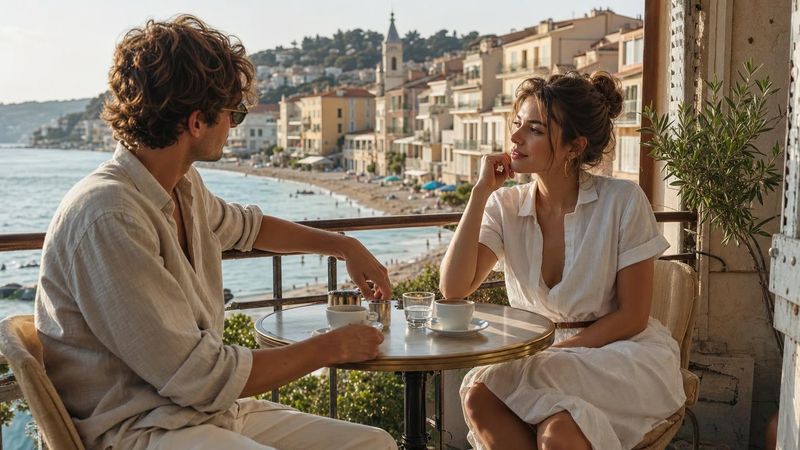
You can tell the aesthetic tide has turned when a director once known mostly to film students starts showing up on model moodboards. Scroll through casting decks, indie editorials, or your favorite photographer’s inspo folder and you’ll see it: sun-bleached beaches, unbranded cotton, friends on a terrace arguing about nothing and everything. That is the Eric Rohmer summer aesthetic quietly replacing the loud, hyper-styled “concept” test shoot.
“Hot Rohmer Summer” began as a cinephile in-joke, a soft-focus antidote to Barbiecore pink and Y2K gloss. But for stylists, photographers, and models, it has become a practical visual language: low-budget, story-first, and instantly readable as “quiet Euro summer” without feeling like a costume. It’s changing what “good” tests and editorials look like, especially outside the big magazines.
From meme to moodboard: why “Eric Rohmer summer” stuck
Rohmer used to be the archetypal “director’s director”: beloved by filmmakers, barely known outside repertory cinemas. That shifted as cinephilia itself became aspirational. Letterboxd watchlists, Criterion Channel carousels, and Instagram accounts like @rohmerfits turned his films into a shared reference point, frame by frame.
At the same time, fashion started to look his way. Luxury houses have nodded to Pauline à la plage and Claire’s Knee in beach campaigns; designers have titled collections after his “Moral Tales” and staged shows that echo his low-key vacation looks. When brands at that level mine Rohmercore, indie creatives get permission to follow, but with more freedom and less pressure to sell a specific bag.
What sticks isn’t nostalgia for a specific decade. Rohmer’s summers feel oddly ageless: Brittany beaches, Rhône vineyards, rented rooms, real apartments. His characters wear clothes you could find in a vintage bin or a current mid-range label. For a model test or editorial, that timelessness is gold; the images age well, and the focus stays on the face, the story, and the light.
Decoding the Eric Rohmer summer aesthetic for fashion images
Underneath all the talk in his films sits a simple formula: small moral crises in big, gentle light. Someone can’t choose between lovers, or isn’t sure whether to change cities, or overthinks a chance encounter on vacation. Nothing explodes, but everything feels important. That scale translates perfectly into an 8–10 page editorial where you want emotional progression without heavy-handed “fashion drama.”
Visually, the Eric Rohmer summer style is about ordinary places made cinematic. Think modest seaside towns, bus stops, rented bungalows, living rooms with bookshelves and mismatched chairs, vineyards and back roads. For a shoot, that can mean a city park that reads like a provincial garden, a friend’s unrenovated kitchen, a motel by a lake, the steps outside a neighborhood cinema. The point: a space the viewer believes your model actually occupies.
Wardrobe is where Rohmercore becomes very usable. His characters favor natural fibers and simple cuts that don’t shout era or brand. For a moodboard or pull list, you’re looking at:
- Loose cotton shirts, ribbed tanks, easy cardigans, fine-gauge knits.
- High-waist shorts, straight-leg jeans, midi skirts, simple sundresses.
- Solid or micro-striped pieces in off-white, navy, washed green, tobacco, muted red.
- Flat sandals, worn sneakers, unfussy leather belts, one tote or straw bag.
Beauty and casting follow the same logic. Skin looks like skin; hair moves in the wind. The cast can skew student, young professional, or midlife; Rohmer’s women aren’t all 19, and his men aren’t all ripped. That opens space for models in their 30s and beyond, for softer gym profiles, for faces with real-life asymmetries. The result feels more like stills from someone’s summer than a campaign for perfection.
Building Rohmer‑inspired editorials on an indie budget
To work, a Rohmer-inspired editorial needs a spine: a tiny story you could pitch in one sentence. “She spends her last day of vacation deciding whether to leave.” “He drifts between three friends over one long afternoon.” “Two exes keep running into each other in the same small town.” Each look becomes a chapter in that almost-plot.
Structure your shots like fragments of a day rather than a lookbook: breakfast light at a kitchen table, walking to the bus, reading alone on a pier, a low-stakes party at golden hour, the quiet after everyone leaves. Rohmer cared about how chance and time affect people; you can echo that with subtle changes in light, hair slightly more undone, makeup wearing off, clothes layered or removed as the day warms.
Location can be anywhere, not just the French coast. “Rohmer Brittany” might be a foggy New England beach, a Great Lakes shoreline, or a commuter train platform in late sun. The key is believable scale: no grand landmarks, just spaces where a long conversation or a missed decision could actually happen.
Turning “Hot Rohmer Summer” into timeless model tests
For model development, Rohmercore solves a common problem: how to make tests feel cinematic without heavy styling or elaborate sets. Start with the model’s real closet, the way Rohmer often did with his actors. Ask them to bring a small “capsule” of well-loved basics in neutrals and one or two colors, plus a book, headphones, a sunhat, or a jacket they actually wear.
Limit yourself to a few looks and build variations by changing locations and micro-styling (shirt unbuttoned, cardigan tied at the waist, shoes off, hair pinned up). That constraint mimics a capsule wardrobe and forces the focus onto expression, gesture, and how the clothes move, not on a parade of trendy pieces that will date fast.
Direction is where the Eric Rohmer summer aesthetic can really update test images. Keep your model talking: ask about their last trip, a difficult decision, a person they miss. Shoot through the answers. Capture them interrupting, thinking, half-laughing, checking their phone, staring out of frame. The best frames often sit between poses, when they believe you’ve dropped the camera.
Swap rigid posing for simple actions: walking to the corner store, leaning on a balcony, waiting at a bus stop, leafing through a book on the floor. Compose as if you’re grabbing stills from a quiet film, not building a portfolio of “strong poses.” Agencies and clients increasingly respond to that sense of lived reality; it hints at how the model might read on video as well.
A “Hot Rohmer Summer” moodboard isn’t about recreating a specific film or era. It’s a toolkit: natural light, believable spaces, clothes that feel owned not pulled, and small emotional stakes that let the viewer project their own memories. Used that way, Rohmercore becomes less a trend than a durable language for images that stay interesting long after the season ends.