The most interesting belt on set right now doesn’t have a buckle at all. It’s the cummerbund, the wide tuxedo sash that used to hide quietly under a black jacket and only show up at weddings or awards nights. Now it is wrapped over jeans, sequined minis, blazers and even coats, acting less like a functional belt and more like a portable piece of tailoring.
For stylists and image-makers, that shift is huge. A narrow belt decorates; a cummerbund redraws the whole torso. On a lookbook rail or an editorial moodboard, this “non‑belt belt” is being used to carve out waists, control proportions and give waist‑up shots a clear focal point. Understanding how it works on camera is quickly becoming part of the job, whether you are styling, shooting or standing in front of the lens.
From tuxedo relic to surprise It waist piece
The modern cummerbund goes back to 19th‑century British officers in India, who swapped heavy waistcoats for a lighter wrapped sash, the local kamarband. The idea travelled into Western black‑tie dressing as a structured band that covered the trouser waistband and created a clean, uninterrupted midsection. For decades it signalled the strictest kind of formality, the opposite of a playful fashion accessory.
That is exactly what makes its current revival interesting. On Celine’s recent menswear runway, designer Michael Rider reimagined the cummerbund in plum and bright pink, worn with balloon trousers and jazz shoes instead of a tux jacket. At Valentino, Alessandro Michele turned candy‑coloured satin bands into a recurring styling code over Art Deco‑ish sequined tops, abbreviated minidresses and even skinny blue jeans, making the sash the star of the look instead of hiding it.
Other houses have picked up the idea in different directions: sporty cummerbunds with capri pants and derby shoes at Issey Miyake, a sash used to close an Oxford shirt at Colleen Allen, more classic versions at Polo Ralph Lauren. On the red carpet, actors like Zendaya and Sarah Paulson have worn looks where the cummerbund replaces a belt entirely or is built into the gown. Ready‑to‑wear labels including Kallmeyer and Brandon Maxwell now design trousers with integrated cummerbund waistbands, proof that this is moving beyond a runway styling trick.
How the cummerbund rewrites the waist‑up silhouette
What makes the cummerbund so powerful in images is simple geometry. Instead of a thin line, you get a broad horizontal band that can cover 8 to 15 centimetres of torso. When that band sits high, closer to the ribcage, legs read longer and the upper body looks more cropped, which is flattering in full‑length and three‑quarter shots. Worn at the natural waist, it suggests a classic hourglass. Dropped lower, it grounds oversized shirts or knits and gives them a deliberate “styled” finish.
In waist‑up framing, which dominates social content and many lookbooks, the cummerbund becomes an anchor for the whole image. It breaks up a plain dress or jumpsuit, guides the eye to the middle of the frame and gives the model a clear point to interact with: hands resting lightly on the band, thumbs hooked above it, or arms lifting to show the fabric folding above and below. Those soft folds can mimic the effect of a peplum or a corset without any rigid structure.
Texture and colour matter just as much as placement. Satin and taffeta catch studio lights and create highlights at the midsection; velvet absorbs light and quietly sculpts the waist without shouting. A tone‑on‑tone cummerbund in the same shade as the dress adds shape that only really reveals itself in movement, while a sharp contrast colour or metallic version becomes a graphic stripe across the body. For editors and retouchers, that stripe is a clear visual line to work with.
On set: how stylists use the non‑belt belt
On editorial shoots, stylists often treat the cummerbund like a portable waistband. One black satin style might move from a sheer blouse look to a tailored coat, then over a slinky slip dress, instantly tying three very different outfits into one story. A bright satin band over vintage blue denim and a simple tank, echoing the Valentino runway, turns a basic model off‑duty look into something cover‑worthy.
For brand lookbooks and e‑commerce, the same logic becomes a practical tool. One sash can refresh carry‑over stock without new samples: the dress shot simply, then again cinched; a blazer shown loose, then belted at the waist with a cummerbund to suggest a dressier option. Common on‑set formulas include :
- A monochrome knit dress with a contrast cummerbund to introduce shape and colour.
- Wide‑leg trousers, tank and open shirt, all secured with a tonal sash to clean up the waist area.
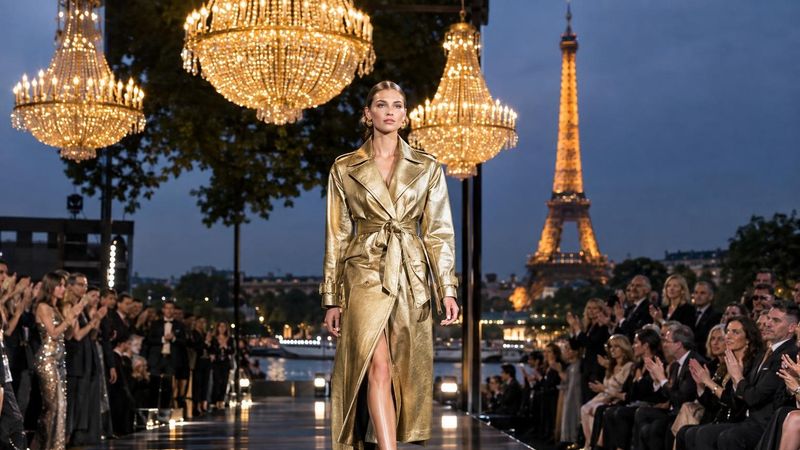
- A long coat or trench wrapped and tied with a cummerbund instead of its own belt for a sharper line.
Many stylists build a small cummerbund kit rather than buying into a full trend drop : a classic black tuxedo sash sourced from vintage, a jewel‑tone satin version, a matte cotton or silk band and a long, wide scarf that can be folded into cummerbund width. Opera scarves and even some shawls work well when wrapped twice. The appeal is that most of this can be pulled from existing wardrobes, studio closets or rental archives, making it a low‑waste way to update imagery.
What this waist focus means for models and campaigns
For models, the rise of the cummerbund belt trend means learning how that band changes your lines. Posing straight to camera with arms pressed against the torso can flatten the effect and create tension at the edges. A slight twist at the waist, one shoulder angled forward or elbows lifted away from the body lets the cummerbund read clearly and emphasises length through the spine instead of any squeeze at the midsection.
Casting and art direction teams also think about how a broad band will sit across different body types. On a shorter torso, a slimmer sash or higher placement can avoid cutting the body in half. On a longer torso, a deeper band can be used to create balance between upper and lower body in tight crops. Softer fabrics and minimal contrast tend to photograph more gently on curvier figures, while strong colour blocking makes sense when the brief calls for graphic, high‑impact shots.
All of this lines up with a bigger shift toward decorated waists in fashion imagery : scarf belts knotted over dresses, trench coats roped with shawls, trousers and skirts designed with built‑in cummerbund panels. As more campaign assets are consumed in vertical, waist‑up formats, the midsection has become prime real estate. A non‑belt belt that can move between looks, bodies and moods gives creatives a flexible way to control that space, whether the literal cummerbund stays “in” or not.