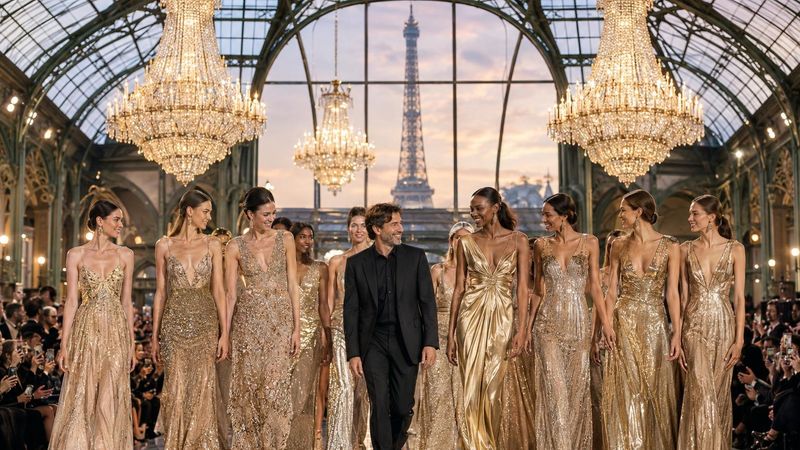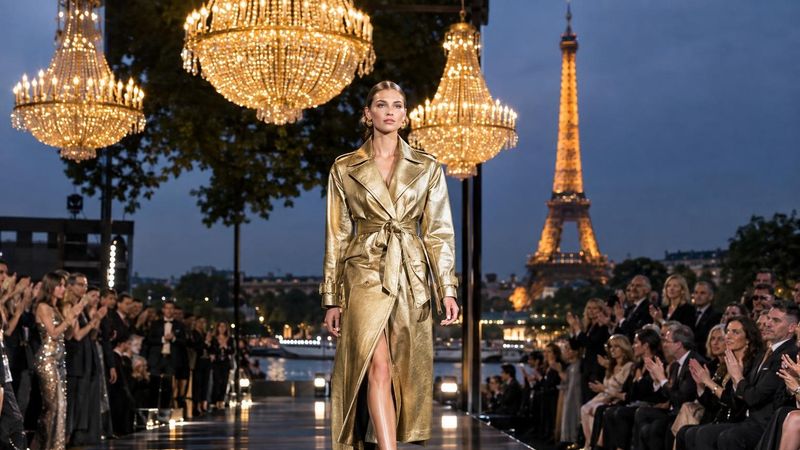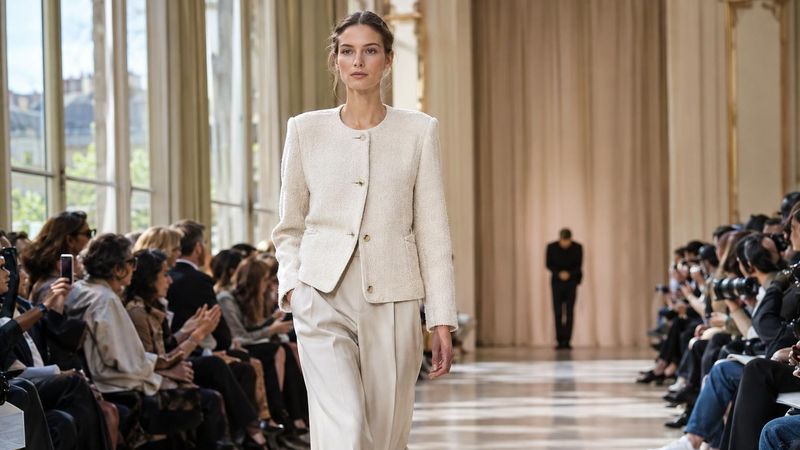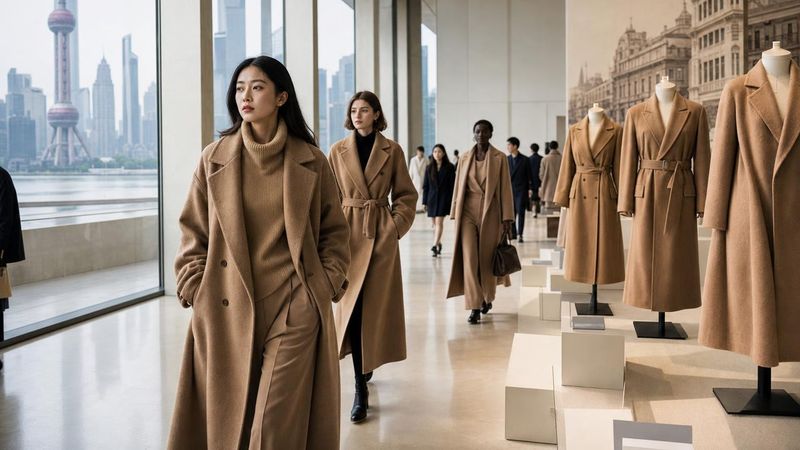
“Can a coat make us feel more confident, stronger, more ready to leave our mark on the world?” Maria Giulia Prezioso Maramotti likes to ask that question. As a board member of Max Mara Fashion Group and granddaughter of founder Achille Maramotti, she has watched the Italian house turn a simple tailored coat into a 75‑year story about women and power. The anniversary was marked in Shanghai with the Resort 2027 show and “The Max!” exhibition, a museum‑scale tribute to the label’s outerwear.
For anyone watching casting grids and campaign credits, the real question is different : how does a heritage house built on camel coats stay visually relevant in an era of viral runway clips and celebrity saturation. Max Mara’s answer leans on three things that photograph well but age slowly : meticulous coats, a quiet luxury vocabulary and a women‑first ethos that shapes which faces front the brand, from campaign veterans to runway regulars.
From coat workshop to women‑first empire
Max Mara started in 1951 in Reggio Emilia, Italy, when Achille Maramotti applied industrial thinking to refined women’s tailoring. Seven decades later, the Max Mara Fashion Group counts around 6,000 employees, some 2,300 stores in more than 100 countries and sales of 1,99 billion euros in 2025. Still family‑owned, the group is chaired by Luigi Maramotti, who describes guiding the company as a cultural mission, not just a business, and talks about building a community of women free to express their talent without compromise. That long‑term view lets the label invest in image with unusual patience.
Creative director Ian Griffiths, who joined in 1987, often says his job is to preserve the house’s identity rather than turn himself into the story. He points out that when Achille Maramotti was sketching, the typical client was “the wife of the local doctor or the local lawyer.” In his eyes, she is now the doctor, lawyer, minister or judge herself, and expects clothes that keep up. His brief was to diversify the offer while editing it so a woman can feel put‑together in every situation without looking like she is wearing a uniform. That philosophy underpins everything from Shanghai’s anniversary staging to the way Max Mara dresses politicians, actresses and business leaders.
Iconic coats and quiet luxury that read instantly on camera
Max Mara’s reputation rests on a handful of coats that have become visual shorthand. The 101801, designed by Anne‑Marie Beretta in 1981, set the template with its oversize yet sharp double‑breasted cut. The Manuela wrap coat of the 1990s pushed that idea into pure camel hair, tying at the waist like a robe. In the 2010s, the plush Teddy coat unexpectedly went viral; by its 10th anniversary the company counted around 90,000 sold, proof that a heritage house could ignite younger feeds without abandoning older clients. More recently, the unlined Ready coat debuted in Shanghai, belted and easy, shown on both male and female models to reflect how outerwear now circulates beyond strict gender categories.
For the 75th, Max Mara dug into its archive and released three limited coats : Meridian, a 1994 cape‑style piece with dramatic volume and leather‑toned cashmere; Millenia, from 1998, remembered for a Richard Avedon campaign that burned its yellow‑lined camel silhouette into fashion memory; and Metric, a 2015 take on the wrap coat in a compact beige with blue lining. Only 200 numbered pieces of each were made. These coats have been displayed in institutions such as London’s Victoria and Albert Museum and in fashion museums in Paris and Copenhagen, reinforcing their status as design objects. On screen and on the street, the same clean lines and muted palette sit comfortably inside the quiet luxury trend, making a Max Mara coat one of the most recognisable frames a model or celebrity can wear without a single logo in sight.
Casting the Max Mara woman : campaigns, celebrities and runway regulars
Long before influencer culture, Max Mara built its image through photographers and anonymous models whose faces served the silhouette. Richard Avedon, Peter Lindbergh, Paolo Roversi, Steven Meisel and others have shot campaigns where the coat dominates the composition and the woman looks like she has somewhere important to be. A shift came in 2013, when actress Jennifer Garner became the house’s first official celebrity spokesperson, signalling that a certain kind of grown, working woman could now stand in for the archetypal Max Mara client. Campaigns in the 2020s continued that line with Edie Campbell fronting stories about time and longevity, and models such as Vittoria Ceretti, Anok Yai, Yilan Hua and Loli Bahia embodying a more international, multiethnic idea of quiet power.
Off the page, the label has always insisted on “real clothes for real women” and avoids the kind of red‑carpet one‑offs that do not reflect everyday life. Yet its coats still end up in highly public images : Nancy Pelosi’s fire‑red Max Mara on the steps of the US Capitol, Catherine, Princess of Wales, in tailored camel, actresses like Angelina Jolie or Julia Roberts photographed between sets, Taylor Swift in a wrap coat on city sidewalks. These are not official product placements, but they work almost like unpaid casting, reinforcing an image of women who are visible because of their work, not their wardrobes. On the runway, the brand favours models with a composed, professional walk and a face that can register subtle emotion rather than shock; becoming a Max Mara regular or campaign face often positions a model as someone clients trust with investment pieces. For aspiring talent, it is a reminder that polish, reliability and the ability to inhabit a character of quiet authority are still currencies that matter.