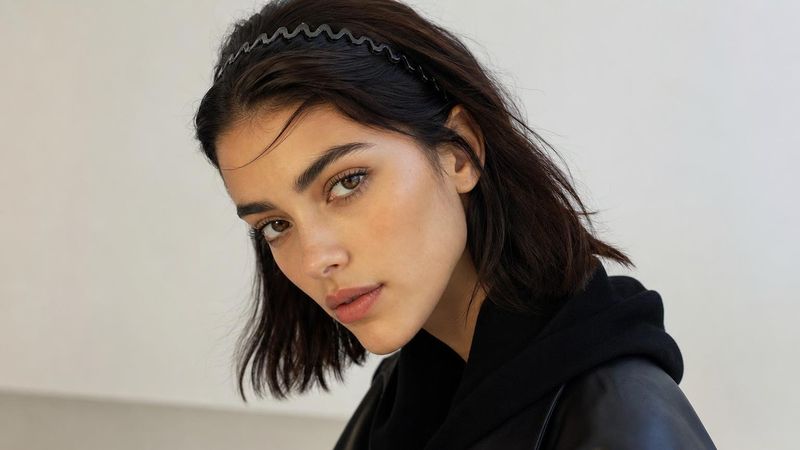
Scroll Hailey Bieber’s recent selfies and you start to notice it: the slim black zigzag headband holding back her chocolate bob. It’s the same comb-style band you could grab in any drugstore in the late ’90s, now framing the face of a top model, beauty founder, and Miu Miu campaign star. Somewhere between the bathroom aisle and Paris Fashion Week, this plastic strip quietly graduated to “runway-approved.”
That shift says a lot about how trends move today. The Hailey Bieber zig zag headband moment isn’t just another nostalgic throwback. It’s a textbook case of how a cheap, practical tool becomes a styling code used in campaigns, on catwalks, and in off-duty model uniforms. For anyone building a book or planning editorials, understanding why this tiny accessory works explains more than any viral headline.
The zigzag headband’s path from drugstore to icon
The zigzag headband, also called a comb headband or stretch-comb headband, is simple: a flexible plastic band lined with teeth that grip the hair and create that wavy, graphic line along the hairline. In the late ’90s and early 2000s it was everywhere — school hallways, football fields, music videos. Think early David Beckham training shots, teen movies, and the general “I play sports but still care about my hair” look.
Eventually it slid into the “too Y2K” pile and disappeared from most mainstream styling kits. What brought it back was the same nostalgia loop driving baby tees, low-rise denim, and frosted gloss. Gen Z rediscovered old photos and movie stills, platforms amplified the aesthetic, and suddenly the comb headband’s mix of practicality and attitude felt fresh again. It keeps hair off the face like a scrunchie, but reads more deliberate and graphic on camera.
Inside Hailey Bieber’s zigzag headband era
Hailey Bieber didn’t revive the accessory alone, but she did give it a new kind of visibility. Over the past seasons she’s repeated one specific formula: a glossy, chestnut-brown lob pushed back with a black zigzag headband. Some days it tops elevated athleisure; other days it’s low-rise white jeans and a camel baby tee that nods to Carolyn Bessette-Kennedy’s clean, unfussy ’90s minimalism.
She’s worn it courtside, in car selfies, and even to high-energy events like a World Cup final, where the headband anchored a sporty bun and sweat-proof glam. That repetition matters. When a model with her reach and a beauty line like Rhode keeps returning to the same low-key object, it reads as more than a one-off styling experiment: it becomes a signature, and that signature is extremely easy (and affordable) to copy.
When Miu Miu turned the zigzag headband into a runway code
The accessory’s real status jump happened on the Miu Miu fall/winter 2026 runway. Miuccia Prada’s team styled look after look with plastic zigzag bands, sliding them into softly pushed-back hair instead of fussy updos. The headbands framed bare faces and slightly lived-in texture, then contrasted with leather car coats, shaggy minidresses, and low-rise satin pants. The message was clear: this wasn’t a joke prop, it was part of the styling language of the show.
Front-row icons of the ’90s, like Chloë Sevigny and Gillian Anderson, appeared in the same comb headbands, closing the loop between past and present. Off the runway, Miu Miu released its own version for hundreds of dollars, while the original plastic versions still sell for the price of a coffee. Hailey’s role in the brand’s campaign, styled again in a zigzag headband with babydoll dresses and leather outerwear, sealed the connection: the piece she wears in daily life is now also a line in a luxury house’s visual identity.
Why models and casting teams actually like this accessory
For all the nostalgia, the zigzag headband earns its place in real working kits because it solves practical problems. It pulls hair away from the face without flattening it, which means bone structure, jawline, and eye shape stay visible on camera. For digitals and quick test shoots, a simple comb headband can give a clean hairline and open forehead in seconds, especially on bobs and medium lengths.
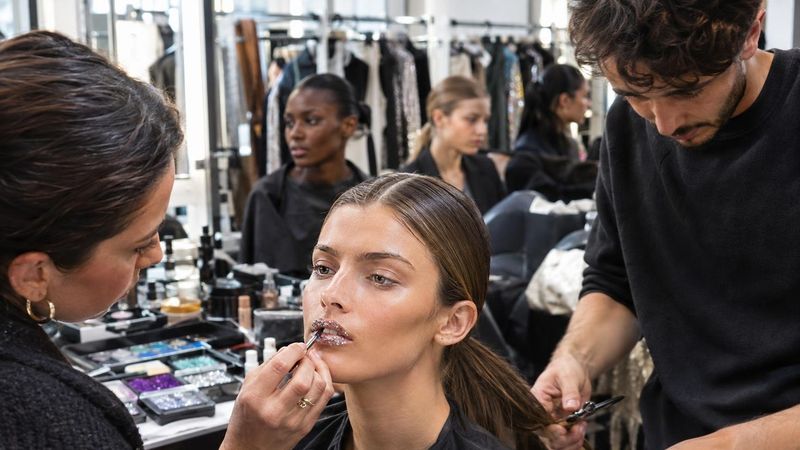
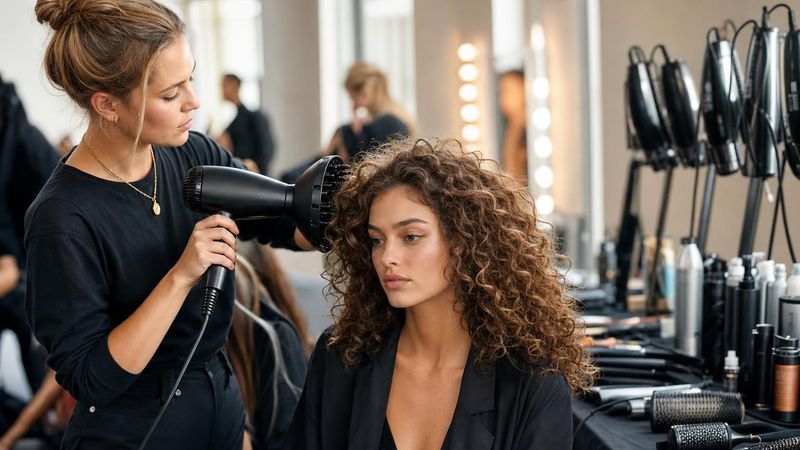
That doesn’t mean it works for every booking. Many agencies still want completely neutral hair in comp cards and first-round castings, so it’s smart to check before showing up in a statement accessory. Where it shines is in beauty tests, editorial mood boards inspired by ’90s minimalism, or commercial jobs leaning into sporty, early-2000s energy. Backstage, hairstylists like it because it’s low-maintenance, works on multiple hair types, and can be removed quickly without a full restyle.
How to style a zigzag headband like a pro
Once you understand why it works on set, styling it at home or for a go-see is straightforward. A few reliable formulas:
- Hailey’s lob: Blow-dry or air-dry hair smooth with a center or soft off-center part. Slide the headband in about an inch behind the hairline so the teeth lift the roots slightly. Keep makeup minimal — groomed brows, sheer base, one gloss — so the frame of hair and face does the work.
- Runway push-back: Start with a natural texture, apply a light cream, then comb hair back with your fingers before adding the headband. Leave a few soft pieces around the ears if you want it less severe. This reads modern in a tailored blazer, leather jacket, or clean trench.
- Sporty bun or ponytail: Put hair into a low bun or high pony first, then place the comb headband. This is practical for travel days, long castings, or any time you need hair secured but want something more intentional than a basic elastic.
- Curls and coils: Detangle and add slip with leave-in conditioner before sliding the band in gently, sitting it more on top of the hair than locked tightly at the scalp. If plastic teeth feel too grabby, look for comb headbands with wider spacing or fabric-wrapped options.
For shopping, you don’t need the designer version to get the effect. Start with a simple black multi-pack from a drugstore or online marketplace; these mimic exactly what appears in most backstage photos. Once you know you like the look, experiment with tortoiseshell, clear, or slightly thicker bands. The luxury versions from houses like Miu Miu are less about function and more about collecting a piece of the brand’s story, which can make sense for red carpet styling or editorial pulls, but isn’t required for everyday model-off-duty hair.