Few accessories earn their keep the way a gold necklace does. It works with a T-shirt and jeans, it works with a cocktail dress, and it holds up through every seasonal reset in between. Once fall layers return, the neckline becomes the one part of an outfit that stays visible under blazers, button-ups, and heavy knits, which makes it the most practical place to spend a jewelry budget.
The goal is not more gold. It is the right gold: a compact set of pieces that layer together, survive daily wear, and move from a Tuesday desk to a Saturday dinner without a change. Building that rotation comes down to four formats, a few length rules, and a clear sense of which pieces deserve solid gold and which are fine in plating.
Four Pieces That Build a Fall Gold Rotation
A rotation works best when every piece has a job. Four formats cover most of the season.
- Foundation chain. A fine snake, cable, or paperclip chain in the 14 to 16 inch range sits at the base of the neck and anchors everything layered above it. Treat this as the piece you rarely take off.
- Everyday pendant. An initial, a small heart, or a zodiac medallion on a 16 to 18 inch chain lands at the collarbone, where it stays visible over a crewneck or under an open collar.
- Texture layer. Beaded chains and charm-ready paperclip links add relief against flat knits and give a plain outfit some depth. Charms are the easiest way to personalize a chain over time.
- Statement piece. One chunky textured chain, sculptural collar, or vintage-style coin necklace converts the simplest outfit into evening wear. Buy it for effect rather than for daily wear.
Layer no more than three at once, varying length and texture so the strands read as separate lines rather than a tangle. A 16 inch chain with an 18 inch pendant is the most reliable pairing; a 20 inch paperclip or coin chain completes the stack as the longest layer.
How the Pieces Read With Fall Clothes
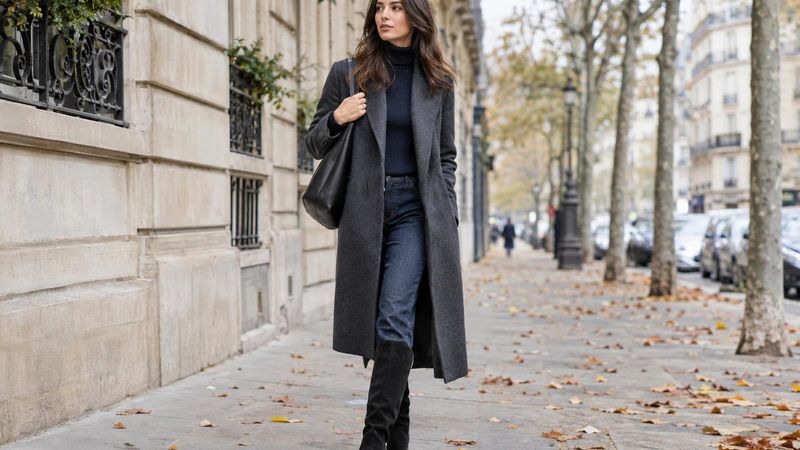
Fine chains and chokers sit high at the neck, which is where they stay visible over a fine-gauge turtleneck or crewneck and where most other gold disappears under a scarf or a collared coat. Keep the necklace delicate when the knit is heavy, since a thick chain over a cable knit turns into visual noise.
Pendants and coin necklaces sit lower on the chest, which makes them the right choice over a crisp button-up worn open at the collar, a plain white tee under a blazer, or a dress with a simple neckline. Coin pendants add a worn-in detail that reads well with denim and tailored wool alike.
Sculptural collars and torque necklaces, a silhouette that traces back to the Iron Age, follow the shape of the neckline rather than hanging from it, which is why they pair naturally with V-necks and minimal evening dresses. Torque styles typically sit open at the back and stay light enough to wear through a long dinner. Lariat or Y-shaped necklaces solve a different problem: worn with a deep V-neck, the vertical line elongates the neck.
What Stylists and Casting Directors Notice
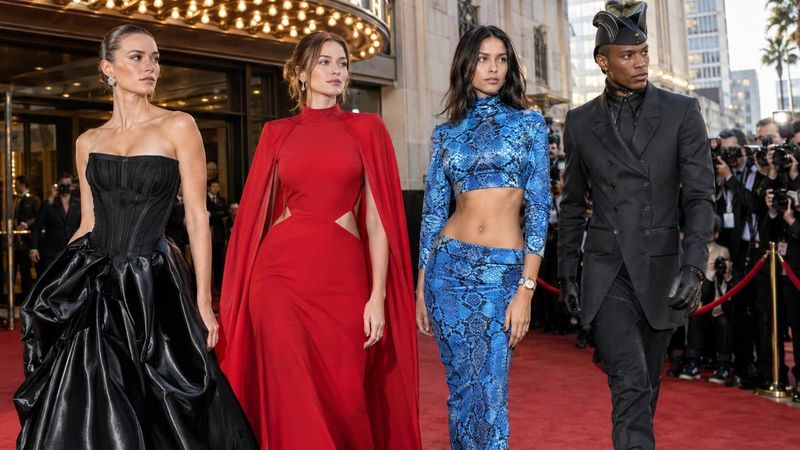
On a go-see or a casting call, jewelry is usually the first thing to come off. A single fine chain or nothing at all keeps attention on the face, the walk, and the proportions of the outfit. Pieces that rattle, swing, or catch the light work against a model in a room where the client studies movement and presence.
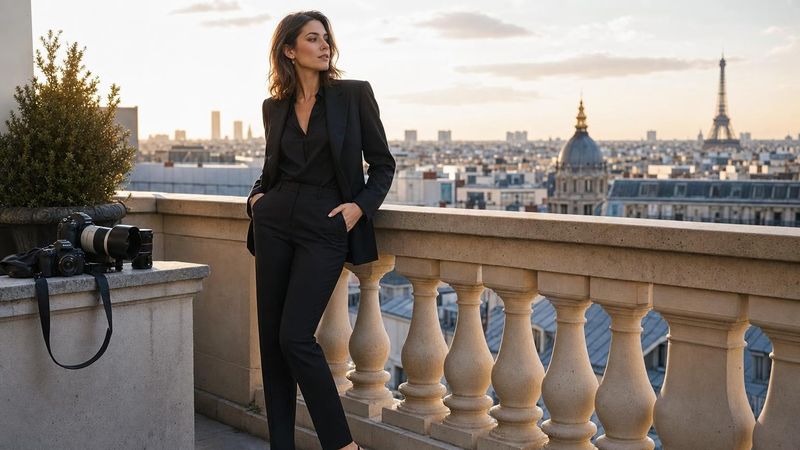
On editorial and campaign sets, the approach flips. Stylists often build a look around one necklace rather than three, and a sculptural collar photographs as a clean graphic line under studio lights. Designer Alexis Bittar has described the aim behind his sculptural collars as an effort to “create a ripple of motion across the neckline.” Coin pendants and charms serve close-up frames differently, giving the camera a small story to read.
Mixing metals is a matter of taste rather than a rule. The practical approach is to anchor a look with one dominant tone and let the second metal repeat somewhere small, such as a watch or a pair of earrings. Care matters as much as styling: jewelry goes on last, after lotion and perfume, and pieces should be wiped after rain, sweat, or friction against wool and scarves.
Quality Tiers: Where to Invest and Where to Save
The label matters less than the composition. Solid 14-karat gold is 58.3 percent pure gold mixed with alloys, which makes it the durable workhorse for a chain worn daily. An 18-karat piece is 75 percent pure, softer and deeper in color, and priced accordingly, which suits an heirloom purchase more than a trend buy.
Gold vermeil sits in the middle: a thicker layer of gold over sterling silver, hypoallergenic, tarnish-resistant, and water-resistant enough for regular wear. Gold-plated brass or copper is the budget tier, and it degrades faster when exposed to moisture, lotions, and chlorine, though a PVD coating improves scratch resistance. Treat plated pieces as seasonal fashion rather than forever pieces.
Clasps deserve a second look before checkout. Spring rings are the most common closure and the flimsiest; lobster claws are the safer everyday standard; box and push-button clasps hold heavy or valuable necklaces most securely. The simplest strategy follows the rotation itself: spend on the foundation chain you never take off, and save on the statement piece you wear a few evenings a season.