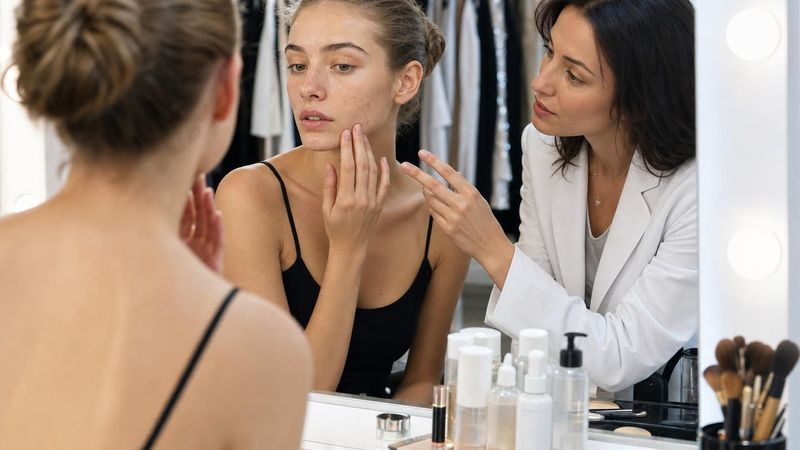
For a working model, there are few worse feelings than waking up mid campaign or right before show season to a face full of new breakouts. If you have just introduced a retinoid serum or a stronger exfoliating acid, those sudden spots might not be “random acne” at all, but skin purging.
Skin purging is a temporary flare that can happen when you start an effective active ingredient. It often looks worse before it looks better, which is emotionally tough when your face is your job. A dermatologist style approach helps you tell the difference between purging and a problem, so you can protect your skin barrier and stay booking ready.
What dermatologists mean by skin purging
In medical terms, skin purging is what happens when a product speeds up skin cell turnover and pushes existing clogged pores to the surface faster than usual. Micro comedones that were sitting quietly under the skin turn into whiteheads, blackheads and small inflamed pimples in your usual breakout zones like the chin, jawline or T zone.
Actives most likely to trigger purging are the ones that work deep in the follicle. That includes retinoids such as retinol and prescription tretinoin, azelaic acid, and exfoliating acids like glycolic and lactic acid (AHAs) or salicylic acid (BHA). Many acne, anti aging and “texture smoothing” products and even some moisturizers contain these. Ingredients like vitamin C, antioxidants and peptides do not usually cause purging because they do not dramatically speed up cell turnover.
Purging vs breakout vs irritation: a quick checklist for models
With purging, timing is the biggest clue. It typically starts soon after you add or increase a new active that unclogs pores. The bumps appear where you normally break out, not in completely new areas, and they can come with dry, flaky patches or mild tenderness as the skin adjusts. Over a few weeks, the flare should slowly settle and blackheads and whiteheads should become less frequent.
A regular breakout behaves differently. If you have not changed your skincare but you have been under stress, flying, switching time zones, sleeping in makeup or wearing heavy, occlusive foundation on set, new acne is more likely. Spots can pop up in places that are not your usual pattern, and there is no clear “start date” linked to a product that speeds up cell turnover.
Irritation or allergy is a third category. This looks less like your classic acne and more like a reactive rash: diffuse redness, burning, stinging, itch, tiny rough bumps or even swelling, often across areas where you do not usually break out. In that case, it is not helpful to “push through” – stop the suspected product, simplify your routine and contact a dermatologist, especially if symptoms escalate.
- Purging: starts right after a new unclogging active, in your usual acne zones, then improves over weeks.
- Breakout: linked to stress, hormones or comedogenic products, may show up in new areas, not tied to one new active.
- Irritation or allergy: red, itchy, burning or swollen skin, often widespread, needs the product stopped and medical advice.
How long skin purging lasts and how to time actives around bookings
Clinically, visible purging can be as short as a few days or stretch up to about six weeks, with an average of roughly two weeks of more intense “acne turbulence”. Some dermatology sources describe purging type blemishes lasting around four to six weeks while old clogs cycle out. In the background, a full skin cell turnover takes about 75 days, which is why the truly clear, refined phase can lag behind the first flare. If your skin is still getting progressively worse after around six weeks on a new active, that is a red flag to review the plan with a professional.
For models, that timing matters. As a rule of thumb, avoid starting a high strength retinoid, prescription tretinoin or strong AHA or BHA peel within six weeks of a major beauty campaign, close up skincare job or fashion week. The safest window to introduce these is during a quieter period in your schedule, just after a big job wraps, or while you are building your book without imminent skin focused shoots. Let your booker know when you start a new active so they can plan digitals, tests and castings around a possible purge phase.
A purge smart routine that keeps skin camera ready
The most model friendly approach is to build a resilient skin barrier first, then layer in actives slowly. Day and night, anchor your routine with a gentle, non stripping cleanser, a simple non comedogenic moisturizer, and a broad spectrum mineral sunscreen with at least SPF 30 and zinc oxide. This combination protects against irritation from frequent makeup changes, hot lights and travel. If your skin runs reactive, spend one to two weeks on this calm routine before you even open a retinoid or acid.
When you do introduce an active, go low and slow. Start a retinoid two or three nights a week, using a pea sized amount for the whole face, and avoid stacking it on the same night as glycolic, lactic or salicylic acid. Some dermatologists suggest applying moisturizer first, then the retinoid, then another thin layer of moisturizer for very sensitive skin. Change only one product at a time so you can trace any reaction. During a purge, focus on hydration, avoid picking or peeling flaky skin, skip harsh scrubs and aggressive facials, and keep makeup non comedogenic. It is fine to wear foundation and concealer through this phase as long as they are removed gently every night. If at any point you develop strong pain, marked swelling, intense itch or your skin stays inflamed beyond the usual purge window, stop the active and see a dermatologist rather than pushing through for the sake of a shoot.