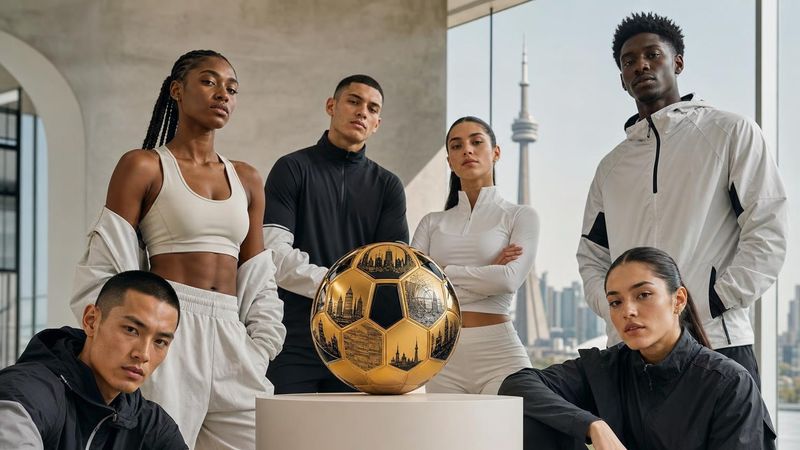
The Adidas Trionda Final is more than the ball used for the last matches of the 2026 FIFA World Cup. It is the object that will sit in every close-up before kick-off, every replay of a winning goal and every retail window built around the tournament. For sportswear brands, that makes it a hero product. For models and athlete‑ambassadors, it quietly sets the rules of the casting game.
Adidas already launched the original Trionda as the official match ball for the full tournament. Trionda Final is its golden sibling, reserved for the two semi‑finals, the third‑place play‑off and the World Cup final itself. When billions of viewers see one product framed that often, it shapes everything from color palettes to who gets booked to stand next to it.
From match ball to global visual icon
On paper, the Adidas Trionda Final is “just” a match ball: four‑panel construction, textured surface, and the connected‑ball sensor that feeds data to referees and analysts in real time. On screen, it becomes a recurring close‑up: on the center spot, in the hands of the referee, cradled by captains during trophy shots.
That repetition matters for casting. When a brand knows one object will dominate the visual narrative of the closing matches, it treats the ball like a fragrance bottle or a luxury bag. Campaigns, social edits, stadium LED, even pop‑up spaces are built around making that object instantly recognizable.
Any face sharing the frame has to support that story. That is where athlete‑models, lifestyle models and celebrity talent come in: they are not just “in kit”, they are there to make the Trionda Final look aspirational, modern and global.
Design and color story: how Trionda Final sets the brief
The Trionda Final World Cup 2026 ball swaps the vivid red/green/blue of the original Trionda for a sharper palette: metallic gold, black and white, with flashes of pink‑red. Gold echoes the World Cup trophy, black grounds the design for night games and broadcast, white keeps it clean and legible on screen.
For stylists and art directors, that palette is a ready‑made brief. Boots and packs (Predator, F50 and the wider “Chaos vs Control” stories) echo the same tones, so full looks often resolve into black or white base layers with gold or bright accents. Wardrobe that fights those colors rarely makes it past pre‑production. Models who understand how to “sell” a product without visually overpowering it have an edge here.
The storytelling goes deeper than color. “Trionda” fuses “tri” and “onda” to nod to the three host nations – Canada, United States and Mexico – and to a triple wave of energy across North America. Graphics weave in host‑nation symbols and the names of the final‑stage cities like Dallas, Atlanta, Miami and New York / New Jersey. That gives creative teams permission, and pressure, to cast talent who feel authentic to these geographies and cultures, not just generic “global” faces.
A new level of World Cup product storytelling needs new faces
Previous World Cups already had special balls for finals, but often the changes were mostly color tweaks. With Trionda Final, Adidas leans into a more distinct, premium identity: the base tournament ball, then an elevated closing‑chapter object with its own story, its own launch and its own merchandising.
That evolution goes hand in hand with how the brand uses people in its campaigns. Around the 2026 tournament, Adidas has been foregrounding athletes like Lionel Messi, Jude Bellingham, Lamine Yamal, Ousmane Dembélé, Pedri and Trinity Rodman not just in team shoots, but in full sports-fashion narratives: streetwear styling, cinematic lighting, mixed with actors and musicians in crossover campaigns.
The result is a clear template for the “athlete‑model” hybrid: someone who delivers at elite level on the field, but also moves comfortably on a high‑fashion set, understands camera angles, can switch from intense game‑mode imagery to relaxed lifestyle sequences, and connects with audiences on social media. A hero ball like Trionda Final gives those hybrids a physical anchor they can play off – juggling, holding, signing, or simply sharing the frame in a way that feels iconic.
What this means for casting directors and talent
For casting directors building World Cup‑era sportswear campaigns, the Adidas Trionda Final quietly tightens a few screws. First, geography: with a triple host (US, Canada, Mexico) and the final‑stage cities printed on the ball, there is a strong incentive to show genuine North American diversity and Latin influence on screen. Expect briefs that specifically mention roots in these regions or their diasporas.
Second, skill set. Even when a project is “lifestyle” rather than pure performance, production wants people who can handle a ball naturally and look convincing in motion. That can mean professional or semi‑pro footballers, but also dancers, freestylers and models with a strong sports background. Comfortable movement, good reaction to direction and the ability to repeat an action 20 times for camera are now baseline.
Third, media fluency. The connected‑ball technology underlines how data‑driven and digital the tournament has become. Brands increasingly look for talents who can carry that story into their own channels: speaking about the tech in interviews, posting behind‑the‑scenes content, participating in interactive activations. A solid on‑camera presence and a clean, engaged social footprint are part of the casting equation.
Beyond the pitch: retail, OOH and creator campaigns
The Adidas World Cup 2026 final ball will not live only inside stadiums. Expect it as a centerpiece in flagship windows, in-store installations, fan‑zone decor, giant inflatable versions above host cities and limited pop‑up spaces built around “the journey to the final.” Each of those touchpoints generates mini‑campaigns that need faces.
For models and creators, that opens up a wide spectrum of bookings: local OOH shoots in host cities, retail launches with live content, interactive fan experiences featuring the ball, and collaborations where creators build their own short‑form stories around Trionda Final. Agents who usually focus on fashion can work with sports marketing teams to place talent in these hybrid roles, where the brief is half campaign, half event.
For aspiring athlete‑models, the practical takeaway is clear. Build a portfolio that shows real athletic motion, comfort with a ball and styling that could sit next to the black‑white‑gold Trionda Final universe. Work on media skills and short‑form content that feels natural, not forced. And if you are based in or connected to the World Cup 2026 host regions, make sure agencies and casting directors know it – because this time, even the ball is telling a local‑global story.