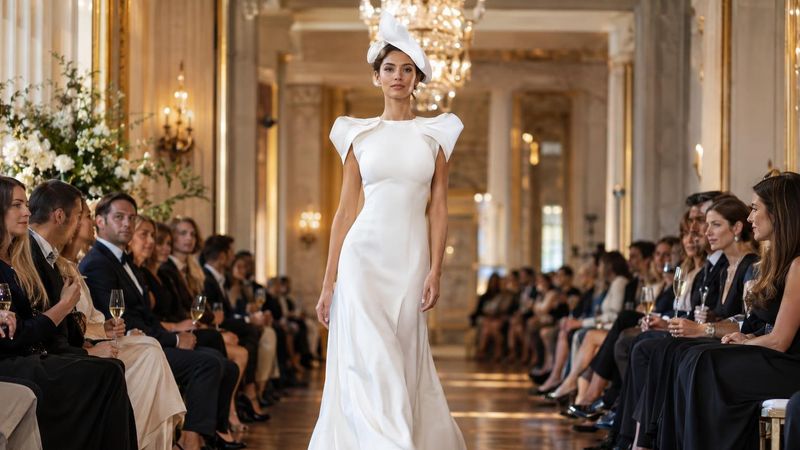
Harris Reed’s Spring 2027 ready-to-wear show had no skyscraper shoes. For the first time in years, the designer sent models down the runway without his signature 18-centimeter platforms, roughly seven inches, a change that alters how a walk looks and feels. The presentation unfolded salon style at the Mandarin Oriental Ballroom in Knightsbridge during London Fashion Week.
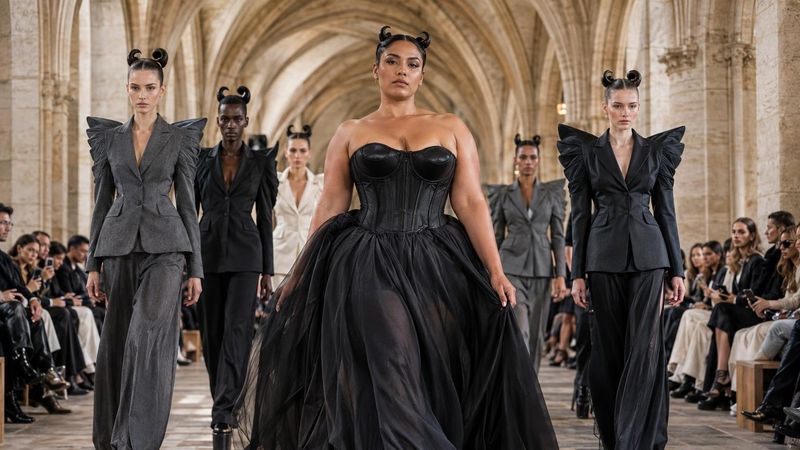
Reed built the collection, titled Loud Whispers, around the people who already buy his clothes rather than an abstract muse. The cast was led by American supermodel Ashley Graham, a longtime fan of the label, and the clothes stayed almost entirely white. For working models and the agencies that represent them, the show works as a test case: less spectacle underfoot, more weight on posture, fabric control and presence.
Harris Reed Retires the Platforms
Footwear came from Manolo Blahnik, and headwear from milliner Stephen Jones, replacing the towering shoes and wide-brim hats Reed has favored for years. A grounded stride lowers the physical load a runway places on ankles and knees across a long show day. It also changes the job itself. With drama coming from sculptural clothes instead of stunt walking, body language becomes the model’s main tool.
The fabric list is long. Reed created bespoke materials for the first time, including jacquard silks, velvets, hand-painted organzas and duchesse satins, shown alongside lace, beading, feather and fringe that extended across exaggerated epaulettes. Moving that weight at a controlled pace takes practice. A floor-length gown or a corseted bodice reads only when a model keeps her line clean and her turns unhurried.
Ashley Graham Leads a Cast Built Around the Client
Reed has spent recent seasons dividing his time between his own label and the house of Nina Ricci, and this collection marks a return to full focus on his own name. He told ELLE UK that the show grew out of re-examining the last seven years of his brand and five years on the London schedule. To Vogue, he framed the all-white archive review as “almost ghostly,” adding that it was “meant to be almost a phantom collection.”
The show’s real anchor was commerce. Reed said he usually starts with a grand inspiration point, but this time he kept asking who his customer was. The answer, he told Vogue, is an international client who owns property in London, and a London salon is planned before the end of the year. Casting Graham as the lead name suggests his bridal and evening lines will keep making room for more body types.
Casting Takeaways From Harris Reed’s Salon Show
Salon presentations reward a different skill set than stadium shows. Guests sat within a few feet of the clothes, cocktails in hand, so micro-expression and client-facing poise carry as much weight as a long-lens runway image. Briefs built for this format tend to ask for individuality and elegance rather than shock.
Whether this is one designer’s reset or a broader London shift is not settled. The direction, though, is legible: fewer footwear gimmicks, more varied casting, and a premium on models who can move between editorial drama and commercial charm. Reed’s older runways asked for balance. This one asked for presence.