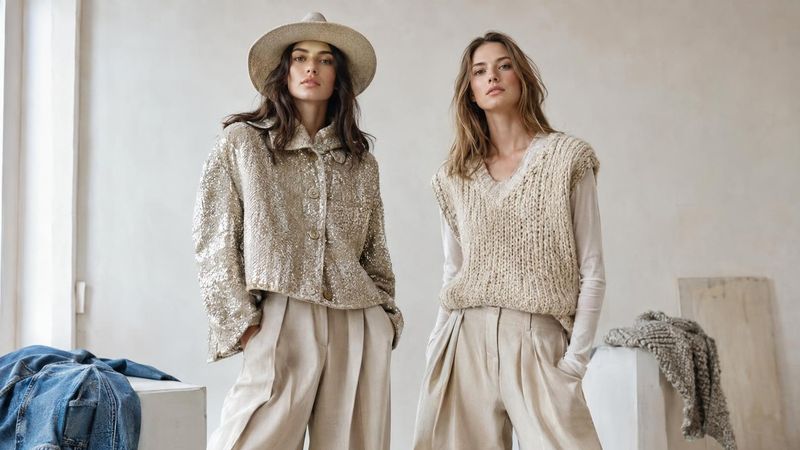
Lauren Manoogian‘s Spring 2027 ready-to-wear collection walked in New York with an unusually metallic note. The brand built its following on knits, neutrals, and serenity, and this season it introduced silver-foiled and metal-woven fabrics, a shift that lands as news for a label where even small changes create ripples.
For models chasing understated runway and editorial work, the collection matters beyond the textile experiment. Quiet, craft-driven shows ask for a specific skill set: movement that reads in oversized silhouettes, presence that holds when the clothes are the most interesting thing in the room, and a face that survives daylight and close crops. Manoogian’s latest outing is a useful case study in all three.
What Walked at Lauren Manoogian Spring 2027
The designer and her collaborator Chris Fireoved set out to build what he called a “dynamic textile story.” Knits stayed in the mix but no longer carried the collection alone. Techniques such as knotting crossed from knitwear into wovens, and the house’s signature calm gave way to unstructured texture. Many loomed materials came out wrinkled, with raw, unraveled edges, and the crinkling came from three different types of metal-woven fabric. Fireoved ran a magnet test and found the metal content too low to react.
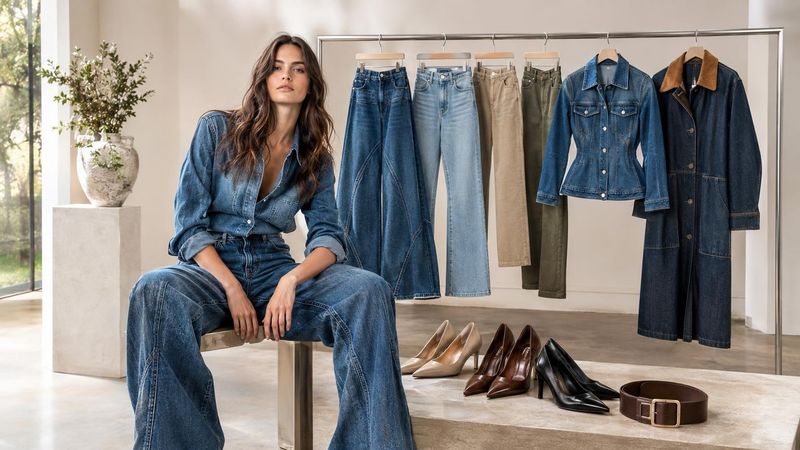
A pewter Lurex tank was paired with what Manoogian described as the brand’s “first real jeans,” cut with a relaxed fit. A roomy vest with shoulder pads and wide pants came trimmed with shaggy edges. Trousers that appeared to wrap around the legs were actually built with, in her words, “a huge inverted pleat.” A brimmed hat made with the Japanese milliner Kijima Takayuki topped a short, bell-shaped khaki jacket for a fisherman look, and an airy vest was hand-knit from strips of fabric resembling raffia.
Why the Quiet Runway Rewards a Particular Kind of Model
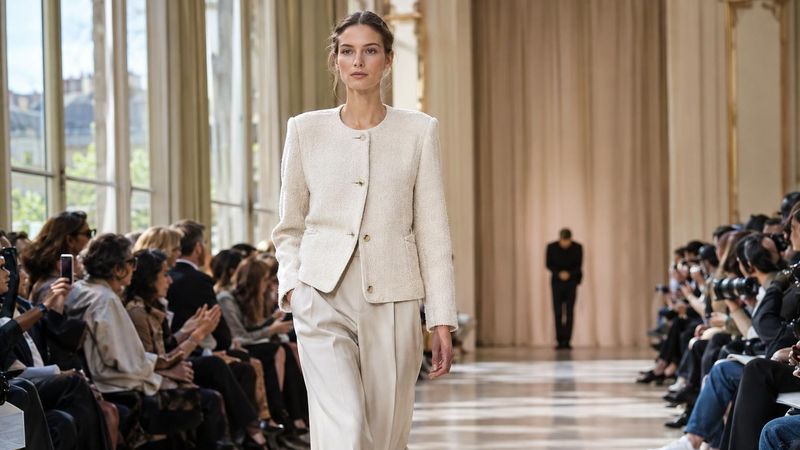
When a collection whispers, the model does the talking. Neutrals and texture in place of color and staging shift attention to posture, pacing, and micro-expression. Walking volume becomes the first technical ask: the pleated trousers and relaxed denim need a stride that keeps fabric moving without letting it swallow the frame. Shaggy hems and raw edges need clean handling on camera, since unfinished texture reads as sloppy when a walk gets rushed.
Accessories rewrite the assignment, too. The Kijima Takayuki brim shades the eyes, throwing weight onto the neck, jawline, and hands at a moment when hair and makeup stay minimal. The collection’s roomy proportions also suit fluid, less gendered casting. Vests with shoulder pads, bell-shaped jackets, and easy denim give androgynous faces room to register, and brands with a craft focus tend to revisit their silhouettes and casting archetypes, which can turn one booking into a lasting relationship.
Turning the Collection Into Portfolio Work
The practical takeaway for models lives in the test shoot. Build a moodboard around the collection’s register: a neutral palette, textured layers, crinkled fabric, minimal accessories, and honest daylight or soft studio light with restrained retouching. One textured hero piece, a knit, a crinkled shirt, or a wide trouser, does more for the frame than a wardrobe full of loud pieces.
Posing shifts as well. Instead of sharp shapes, work slow, continuous movement and small torso shifts that create friction between fabric and light. Close crops perform here: hands resting on a knit, hair against a textured collar, a profile under a brim. Understated does not mean low impact on the page. When expression, posture, and styling are intentional, quiet images carry as much weight in a book as theatrical ones, and they signal to casting directors exactly which lane a model is ready for.