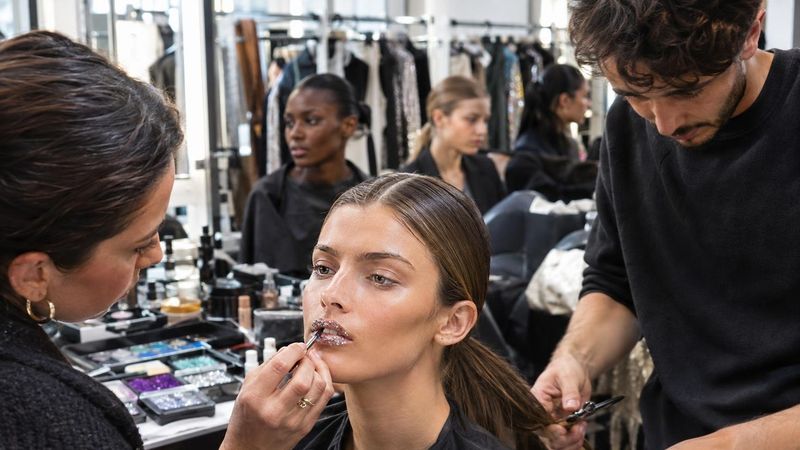
At the Business of Fashion’s Business of Beauty Global Forum in Napa Valley, one of the quieter rooms drew some of the most forward‑looking conversations. Around a long table, BoF and Clinuvel Pharmaceuticals hosted a community lunch dedicated to one topic that cuts across beauty, medicine and wellness : the future of skin health.
Instead of a product pitch, guests heard from scientists, brand founders, investors and creatives who all depend on healthy skin in different ways. For anyone in fashion or modeling, where skin is part of the job, that lunch offered a preview of what is coming next : a world where photomedicine, nutrition, mental health and skincare routines work together rather than in silos.
Inside the BoF x Clinuvel lunch: when skin health becomes strategy
Community lunches at the Global Forum are designed as small, candid sessions. The Clinuvel table brought clinical expertise into a room usually dominated by marketing decks and campaign images. The conversation quickly moved past “what’s trending in skincare” to “what it will take to keep skin functioning well across a much longer working life”.
Guests compared notes on how language is changing. “Anti‑ageing” sounds dated next to ideas like skin longevity and “skin resilience”. Daily SPF has shifted from nice‑to‑have to non‑negotiable, especially in an industry built on long days under studio lights, on runways or on location. The lunch made clear that skin health is becoming a strategic issue for brands, agencies and image‑makers, not just a personal concern.
From photomedicine to prevention: what Clinuvel brings to the table
Clinuvel Pharmaceuticals is not a traditional beauty player. The company focuses on rare genetic and systemic disorders that make patients exceptionally sensitive to light, such as erythropoietic protoporphyria or xeroderma pigmentosum. Its expertise sits in photomedicine, the science of how light interacts with skin, DNA and pigment systems.
By working with patients who can develop burns or skin cancers from minimal UV exposure, Clinuvel’s teams have spent years studying how to block or limit UV damage from the inside as well as the outside. Their research touches melanin pathways, DNA repair and systemic photoprotection, and some of it is delivered through prescription implants rather than creams.
The company’s Photomedicine Foundation extends that knowledge to communities with albinism and other high‑risk groups in regions with intense sun, funding photoprotection programs and regular skin checks. Extreme cases like these act as a kind of laboratory for prevention. The same principles – consistent protection, early repair, long‑term monitoring – are now inspiring how consumer brands think about sunscreens, after‑sun care and “urban” UV exposure.
Skin as a living organ: why lifestyle suddenly matters so much
Dermatologists at the lunch reminded the room that skin is not just a filter for makeup. It is the body’s largest organ, representing roughly 7 percent of body weight. The outer layer, the epidermis, renews itself completely every five to seven weeks. Just below, the dermis is built from a matrix of connective tissue rich in collagen and elastin. Collagen and related proteins account for around 75 percent of the skin’s dry weight.
Because the skin is constantly rebuilding itself, everyday inputs matter. Nutrition research shows that diets high in refined sugar and ultra‑processed foods promote low‑grade inflammation and glycation, a process where sugars bind to collagen and make it stiffer. The result tends to be a duller tone and earlier lines. An eating pattern built on vegetables, fruits, quality proteins and healthy fats supports smoother, more elastic skin over time.
The invisible players in this story are the gut microbiome and stress hormones. A disrupted intestinal microbiota can amplify inflammation and affect immunity, which often shows up as redness, breakouts or flare‑ups. Chronic stress raises cortisol, a hormone that breaks down collagen and can dry out the skin. Long production days, travel and irregular sleep are part of fashion life, which is why the wellness piece now sits firmly inside the skin conversation.
Specific nutrients drew attention around the table. Colorful plants bring polyphenols and carotenoids that act as internal antioxidants. Berries, cocoa, green tea, pomegranate, carrots, tomatoes, squash and sweet potatoes help neutralize free radicals and support collagen. Clinical work on flavanol‑rich cocoa drinks has reported improvements in skin hydration, firmness and even UV tolerance in photo‑aged women. Another trial in middle‑aged women taking 4 mg of the carotenoid astaxanthin daily for six weeks found better hydration, elasticity and finer lines compared with placebo.
Fats also play a structural role. Monounsaturated fats from olive oil, avocados and nuts, plus essential fatty acids from seeds and walnuts, help keep cell membranes flexible. Only two fatty acids are truly essential – linoleic acid (an omega‑6) and alpha‑linolenic acid (an omega‑3) – and deficiency shows up as dry skin, brittle nails and dull hair. Longer‑chain omega‑3s such as EPA and DHA, found in sardines, salmon or mackerel, help calm inflammation that can make skin feel irritated or reactive.
Hydration came up in more ways than one. Beyond water itself, high‑water foods like cucumbers and melon contribute to plumper, smoother skin. Legumes and certain grains naturally contain plant ceramides, lipids that help the outermost layer of the skin retain moisture. Ingested ceramides have been shown in human studies to support better hydration from the inside, echoing what many see on the surface with ceramide‑rich moisturizers.
What this future of skin health means for models and fashion creatives
For working models, the picture that emerged over lunch is both demanding and empowering. A long career in front of the camera will not be built only on the latest serum. It will rely on disciplined photoprotection, thoughtful nutrition, realistic scheduling and professional dermatology support. Choosing whole, nutrient‑dense foods most of the time, watching caffeine and alcohol during heavy work periods, and treating sleep as part of “skin prep” are starting to look like part of the job description.
Agencies and clients have their own incentives to lean into this shift. Healthy, resilient skin means less downtime from flare‑ups, lower reliance on heavy retouching and a broader casting pool that includes sensitive and darker skins without fear of damage on set. Some productions already reflect this mindset in practical ways, from covered waiting areas outdoors to backstage meals that favor vegetables, grains, good fats and water over sugary snacks.
For beauty brands, the BoF x Clinuvel lunch was a reminder that credibility now depends on alignment with medical and nutrition science. Future‑focused lines are likely to combine high‑level UV filters, barrier‑supporting formulas and possibly ingestible products that target collagen, antioxidants or the microbiome, backed by data rather than slogans. Inclusive research across skin tones and conditions is part of that same journey, especially when the industry’s imagery finally begins to show real texture and diversity rather than flawless, flattened skin.
The image of that Napa table – dermatologists, executives, creatives and talent talking over plates built around vegetables, healthy oils and grilled fish – captures where skin health is heading. For fashion, the most valuable filter is no longer on the camera but in how the industry treats skin as a living organ to be protected, nourished and respected over decades.