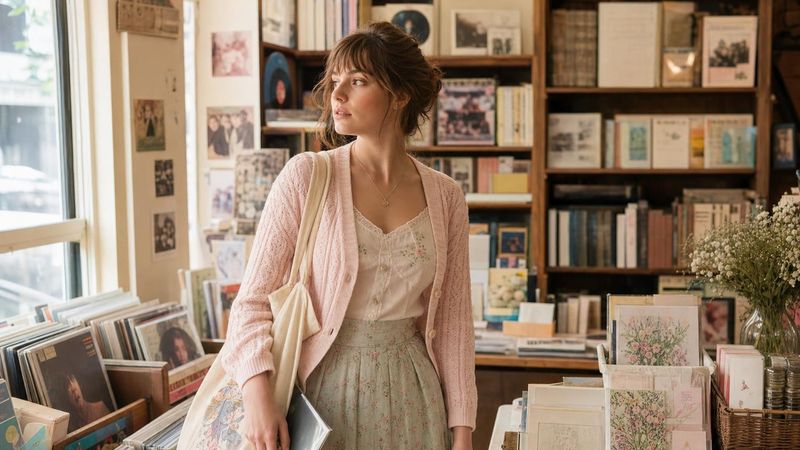
Memory NYC, the womenswear label from Korean American creative director Suea, feels less like a debut brand and more like stepping into someone’s private scrapbook. For years, her followers have visited her Instagram and Substack for glimpses of life between Seoul and New York: grainy travel snaps, vintage outfits, dreamy food sculptures, and a quietly obsessive eye for detail. With Memory NYC, that visual world has become a wardrobe.
The clothes are pastel, nostalgic, and openly girlhood-coded, but they are designed for women in their thirties and beyond. That tension is exactly what makes Memory NYC interesting for the fashion and modeling worlds. It hints at a new wave of casting, campaigns, and beauty storytelling built around comfort, softness, and long-term character rather than fleeting, hyper-sexualized “cool.”
Who Is Suea, the Tastemaker Behind Memory NYC?
Suea’s eye was shaped long before she put her name on a label. Born in Seoul and raised in the US, she moved from Montana to New Jersey, where Sunday trips to the mall and the Abercrombie & Fitch store became an early lesson in retail fantasy. She has talked about remembering the store’s cologne cloud, taxidermy, and moody campaigns as much as the clothes themselves. That fixation on atmosphere shows up clearly in Memory NYC.
After studying at UCLA and spending a year in Paris, she arrived in New York for a merchandising internship at Dover Street Market, then spent five years at Opening Ceremony across buying, marketing, and content. Those jobs trained her to read garments on real bodies, understand how casting shapes a brand’s community, and think of stores as stages rather than simple racks.
Later, as a creative producer at Instagram, she started posting surreal DIY food creations: angel-shaped olive oil puddings, teddy bear cakes, onigiri “chairs.” That side project turned into Suea’s Dinner Service, a full-time food art practice with fashion week clients and editorial styling work. The same instinct for building tiny, self-contained worlds now underpins Memory NYC, but in fabric instead of meringue.
Inside Memory NYC’s Girlhood-Meets-Grown-Up Aesthetic
The brand’s name comes from a simple line of hers: she jokes that she has a terrible memory, “but I always remember what I was wearing.” Memory NYC treats clothing as an emotional archive: the skirt from a trip, the T-shirt from a perfect summer, the blouse that belongs to no particular moment and yet to all of them.
The seed for the label was a gauzy white fabric sprinkled with multicolored stars that she found in Tokyo. Back in Seoul, she took it to a local tailoring ajumma to recreate a favorite vintage silhouette. The result, the Tokyo skirt, set the tone: slightly low-rise, pintucked, pretty but not precious, rooted in the kind of auntie-level craft you associate with clothing that actually lasts.
Memory NYC’s first capsule is tight and intentional: pastel cotton tees, soft panties and boy shorts, elegant skirts and blouses. Many tops borrow their cuts from vintage children’s clothing, like the Paris and Bunnies blouse, while the Seoul panties are modeled after Korean deadstock underwear, positioned as a comfort-first alternative to glossy lingerie. Her own wardrobe is “90% vintage and 10% luxury,” and she has been vocal about wanting to make durable pieces at a sharp price point instead of chasing fast-fashion margins.
Age is part of the design brief. At 32, she says she no longer wears miniskirts, so there are none in the collection; she wants her friends over 35 to feel at ease in Memory NYC. That matters for casting and imagery: this is girlhood reimagined by adults, not youth being styled to look even younger.
What Memory NYC Suggests About Future Casting
Brands like Memory NYC rarely spell out a casting manifesto, but the clothes and the story around them offer strong clues. When a line is built around grown women reclaiming softer, childlike shapes in non-restrictive fabrics, it almost asks to be shown on faces and bodies that read as lived-in, not untouched.
Expect labels in this space to lean into age diversity within a realistic band: late twenties through forties, rather than exclusively 18-year-olds in baby-doll blouses. The absence of miniskirts and overtly “sexy” cuts also lowers the pressure to default to the hyper-toned, hyper-arched lingerie pose. Cotton boy shorts and deadstock-style panties suggest casting that allows for relaxed posture, softer stomachs, and a gentler gaze.
There is also the geographic triangle shaping the brand: Seoul, Tokyo, and New York. That mix makes it likely that Memory NYC will continue the industry’s slow shift toward more East Asian and diasporic representation, not as a diversity checkbox but as its natural community. Think models who look like they might actually shop at a Seoul stationery store or browse a New York concept bookstore on a rainy afternoon.
For working and aspiring models, the signal is clear: as more indie labels chase this kind of nostalgia-infused comfort, casting briefs may prioritize personality, quiet charisma, and a sense of story over extreme height or a perfectly “blank” canvas.
Campaigns in the Substack Era: How Memory NYC Builds Its World
Unlike heritage houses that build campaigns on big ad buys, Memory NYC starts from a different place: an existing audience that already reads Suea’s Substack newsletter, “From, Suea,” for travel guides, hair-care diaries, shopping notes, and K-drama chatter. That newsletter functions as a pre-built campaign lab. A pop-up announcement, a packing list, or a fabric story can double as mood and casting direction.
The first in-person pop-up at Climax Books, a cult New York concept shop, fits that strategy. A bookstore as a retail stage frames the brand around reading, collecting, and browsing; it also hints at how future lookbooks may be shot. Instead of white cycloramas, think shelves, stacks of magazines, and tiny couches. Models could be styled as if they’ve just slipped out of the stacks in their Memory skirts and tees.
Packaging deepens the world-building. Purchases arrive wrapped in pastel, polka-dotted paper, accompanied by a dress-up sticker and stationery set illustrated by artist Sara Yukiko. Limited vinyl bags referencing early-2000s Scoop NYC shopping bags nod to a specific era of New York status merch. All of these objects are ready-made campaign props, and they give models more to interact with than just a camera: bags to clutch, stickers to arrange, letters to write.
The Beauty Language of Memory NYC
Before launching the label, Suea spent time working at a beauty brand in Seoul and has written candidly about hair care on her Substack, as well as her love of K-dramas. Those touchpoints suggest a beauty direction that borrows selectively from K-beauty polish while keeping the overall effect low-pressure and real.
Visually, the clothes sit most naturally with skin that looks like skin: sheer coverage, a soft flush on the cheeks, maybe a hint of gloss rather than heavy contour and sharp highlight. Hair can skew toward “done but not perfect” – brushed-out waves, simple clips, or half-up styles that echo the girlhood references without tipping into costume.
Nails and small details matter in this universe. Pastel or milky manicures, tiny motifs that mirror the stationery, and quietly playful accessories will read more on-brand than maximal crystals or extreme length. Fragrance, too, is likely to be treated as part of the storytelling, echoing her early fascination with the Abercrombie store’s scent cloud; if Memory NYC ever develops a perfume, it will probably be more about triggering a specific memory than making a loud entrance.
For beauty professionals and models, this points to a growing appetite for looks that feel nostalgic and styled, yet approachable enough to live in. As Memory NYC and similar labels grow, their campaigns are likely to reward faces that can carry this kind of softness on camera – expressive, slightly imperfect, instantly believable as the protagonist of their own quiet coming-of-age story, even if that “age” is thirty-five.