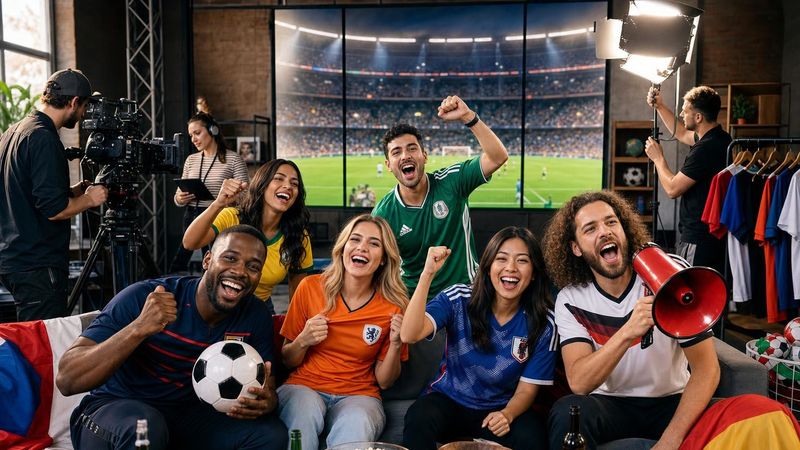
On Sunday, July 19, the 2026 World Cup final broadcast turns MetLife Stadium in New Jersey into the center of the media universe. Argentina face Spain with a 3 p.m. Eastern kickoff, and for commercial models that timeslot is more than a match on TV. It is a fixed point brands build entire campaigns, fan zones, and last minute shoots around.
Agencies and casting directors in New York, Los Angeles, Madrid and Buenos Aires have had that Sunday circled for years. Global sponsors, streaming platforms and retailers load their biggest football themed creative into that window. Understanding when and how the final airs helps commercial models read the casting calendar and spot which briefs are quietly tied to the biggest game of 2026.
The 2026 World Cup final broadcast at a glance
The final takes place at MetLife Stadium in East Rutherford, just outside New York City, with kickoff set for 3 p.m. Eastern. That means lunchtime to mid afternoon on the US East Coast, midday on the West Coast, early evening in most of Europe and late night in much of Asia. In programming terms, it is a rare moment that hits daytime America and prime time Europe at once.
In the United States the game airs free over the air in English on FOX and in Spanish on Telemundo, with cable coverage on FOX Sports channels and Universo. Streaming comes through FOX One and the FOX Sports app on the English side, and Peacock for Spanish language viewers, plus live TV bundles like YouTube TV, Hulu + Live TV, Fubo, Sling and DirecTV Stream. For brands, that mix of broadcast, cable and connected TV means campaigns need multiple edits and aspect ratios, which in turn drives demand for commercial talent across hero films, cutdowns and social versions built from the same shoot.
A Super Bowl style spectacle brands plan years around
FIFA’s figures for Qatar 2022 suggested around 5 billion people engaged with tournament content and roughly 1.5 billion watched the final between Argentina and France. With 2026 hosted in North America and scheduled into US friendly daytime hours, media planners treat this next final like a Super Bowl that runs on a global scale.
This edition adds something new. Coldplay’s Chris Martin is curating the first World Cup halftime show, a planned 11 to 20 minute segment featuring Madonna, Shakira, Justin Bieber, BTS, Burna Boy, Gustavo Dudamel, Coldplay, the PS 22 Chorus and even Muppets. That slot will be styled, lit and sponsored like a music mega special. Wardrobe, dancers, featured extras, stand ins and surrounding campaign imagery all use commercial talent, not only touring crews.
The build up has already shown how football news becomes entertainment. The United States men’s national team roster was announced in New York at a live event with players on stage and a performance by rapper and singer Gunna in front of fans. Some players featured in kit ads and World Cup themed commercial campaigns before final selections were even confirmed. The same pattern holds for brands targeting the final, with creative assets often planned 12 to 18 months ahead and released in waves through group stage, knockouts and then the last match.
Fan zones, live events and on the ground work for models
Beyond the TV broadcast, the 2026 final fuels a whole ecosystem of sponsored spaces that book commercial talent. Around New York and New Jersey, official fan zones, branded viewing parties, hotel hospitality suites and corporate hosting will need emcees, greeters, VIP hosts and sampling staff. Other US cities and global hubs, from Miami to London and Buenos Aires, will run their own sponsored watch events with similar roles.
For many commercial models, the most realistic touchpoints are not on the pitch but in campaigns and experiential work that mimic how real fans watch. Typical World Cup final related bookings include:
- TV and online spots built around living room or bar watch parties
- In store and out of home visuals for supermarkets, sportswear and drink brands
- Brand ambassador teams inside fan zones and pop up viewing spaces
- Quick turn social content where talent play friends reacting to key moments
Long lead hero campaigns for official sponsors are often shot a year or more in advance, with castings labeled around “global football fan” or “friends watching a big game” rather than the word final. Regional retailers and streaming platforms usually brief 3 to 6 months out. During the tournament, production companies keep flexible concepts ready to shoot around the semifinals and final weekend, sometimes holding options on versatile commercial faces so they can film winner and loser versions as soon as the result is known.
For models and their agents, treating the 3 p.m. kickoff on July 19 as a career calendar marker makes sense. It is the point many football themed contracts, options and usage periods converge, and it signals when the industry will pivot from World Cup storytelling to whatever comes next.