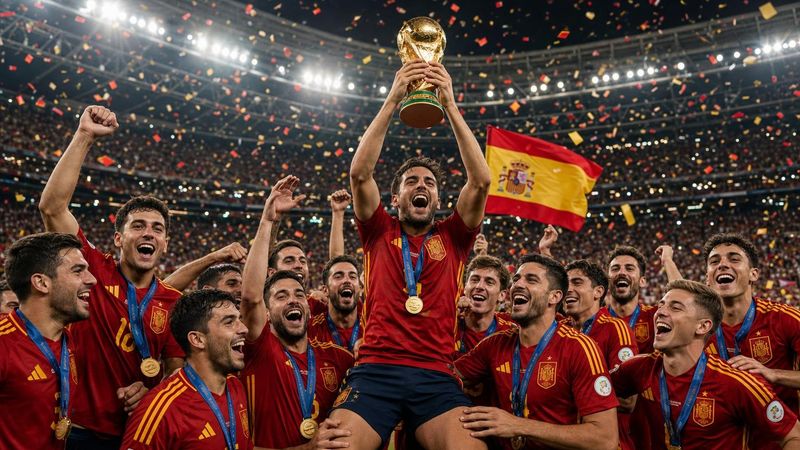
Spain’s dramatic Spain 2026 World Cup win over Argentina did more than decide a trophy. Played in New Jersey in front of a global audience that looked a lot like a Super Bowl crowd, it instantly reshaped which athletes brands will want in campaigns, on billboards and sitting front row. Ferran Torres’ extra‑time goal, Lamine Yamal lifting the trophy and captain Rodrigo Hernández leading celebrations are already the hero images marketers are saving to moodboards.
This was sold as a “tournament of firsts”, from the expanded 48‑team format to a final staged in the New York market with US fans fully locked in. That combination makes Spain’s victory feel less like a purely sporting story and more like the opening chapter of the next sponsorship cycle, where athlete model crossovers and sportswear casting are likely to tilt toward La Roja.
Spain’s World Cup dominance on a North American stage
On the pitch, the story was simple and ruthless. Spain beat Argentina 1–0 after extra time at MetLife Stadium, with substitute Ferran Torres scoring late in the second period of extra time against a side reduced to ten men. Across the tournament Spain conceded only one goal in eight matches and extended an unbeaten run that now stretches into record territory for a European team, the kind of statistical dominance brands love to translate into ideas of control, consistency and calm under pressure.
The setting matters almost as much as the scoreline. A World Cup final in the New York New Jersey area brought prime US time slots, celebrity attendance and wall‑to‑wall coverage from American networks that normally prioritize basketball and football as in NFL. Images of Spain celebrating in an NFL stadium will live alongside other US sports iconography, which subtly nudges Spanish players into the same visual universe as star quarterbacks or MVP point guards in the minds of global sponsors.
Double World Cup champions and a concentrated casting pool
Spain’s men lifting the trophy in 2026 comes less than three years after Spain’s women became world champions in 2023. That makes Spain the first nation to hold both men’s and women’s World Cup titles at the same time, an alignment that is very attractive for global sportswear and lifestyle brands. One federation, one flag and two champion squads mean a ready‑made “era of Spanish football” storyline that can run across kit launches, capsule collections and lifestyle content without changing the national narrative.
Within that, individual faces will move to the top of casting shortlists. Ferran Torres now carries the “decisive on the biggest night” tag that sells everything from boots to fragrance. Lamine Yamal, still a teenager, is the image of a new generation, ideal for sneakers, streetwear and youth‑focused editorials. Rodrigo Hernández, known as Rodri, brings a different energy, the serious leader who already owns every major club trophy and now the World Cup, a natural fit for watches, tailoring or elevated athleisure. Around them, familiar Spanish icons like Pau Gasol, Carlos Alcaraz and Rafael Nadal celebrating the win underline how crowded the country’s roster of marketable champions already is, inviting mixed‑sport campaigns that put footballers next to basketball and tennis stars.
From halftime spectacle to the next sponsorship cycle
For the first time, a FIFA World Cup final came with a full halftime show, headlined by Madonna, BTS and Shakira. The broadcast felt closer to a music and fashion special that happened to have a title match attached, which is exactly how many sponsors want it. Stage outfits, hair, makeup and choreography were dissected in real time on social platforms, right alongside replays of Torres’ goal and shots of Yamal with the trophy, turning the whole evening into a rolling lookbook for both sportswear and performance fashion.
That blend of football and pop spectacle will shape casting briefs over the next cycle. US audiences that discovered the tournament through headline performers or social clips are now familiar with Spain’s champions, giving American sportswear, beverage, beauty and tech brands permission to build campaigns around them. Expect more shoots that place Spanish players in lifestyle scenes rather than pure match action, often opposite professional models and creators. For working models, the practical impact is simple enough. Football‑adjacent castings, from watch‑party stories to athleisure editorials framed around Spanish colors, are likely to increase, and knowing the basic narrative of this World Cup makes it easier to slide into those worlds as naturally as any runway season.