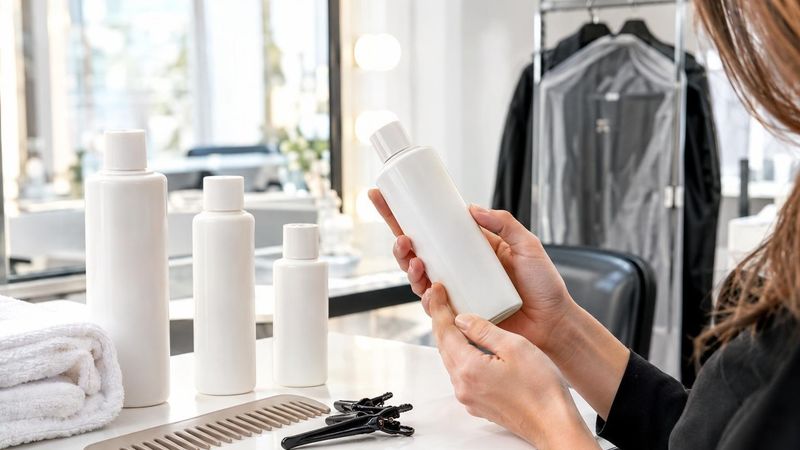
Backstage hair damage rarely comes from one dramatic bleach appointment. It builds across a season: runway styling, repeated hot tools, hairspray, extensions, wig caps, hotel water, and quick changes that leave no time for a slow mask. By the time a model notices broken pieces in her brush or ends that snag on a comb, the cuticle has been roughed up and the inner structure has taken hits.
The best conditioners for damaged hair do more than make strands feel soft for an afternoon. They help strengthen the strand, smooth the cuticle, and reduce the friction that leads to breakage. For a working model, the useful question is not only which formula repairs from the inside out, but which one fits a backstage schedule, a fine-hair texture, or a color-treated head that needs to stay camera-ready between bookings.
What Backstage Hair Actually Goes Through
Runway, editorial, and e-commerce work puts hair through mechanical, thermal, chemical, and environmental stress. Backcombing, tight braids, repeated brushing, and extension removal pull at the strand. Flat irons and curling wands strip moisture. Color and bleach weaken bonds. Travel and hotel water can leave hair dull or rough. Damaged hair tangles easily and snaps when wet, and the most breakage often happens during wet detangling.
Conditioner is the daily workhorse. A rinse-out formula adds slip, helps seal the cuticle, and can carry active ingredients that support structure. Bond builders and peptides that once lived only in salon treatments appear in everyday conditioners, along with proteins designed to mimic the hair’s own keratin. Wella’s Ultimate Repair Conditioner uses a patented AHA and Omega-9 technology and asks for only 30 seconds on clean, damp lengths before rinsing. That short window matters backstage.
The Three Kinds of Inside-Out Repair
Inside-out repair generally happens in three lanes: bonds, keratin, and lipids. Bond-building conditioners target the links that bleach, heat, and tight styles break. Olaplex No. 5 Bond Maintenance Conditioner is the benchmark. “Olaplex No. 5 stands out because it delivers true structural repair rather than simply coating damaged strands in heavy silicones,” says trichologist Jay Small. The formula takes about three minutes. Redken Acidic Bonding Concentrate Conditioner uses citric acid for color-weakened bonds, while Goldwell Dualsenses BondPro+ Fortifying Conditioner uses peptides and algae extracts to form ionic and hydrogen bonds.
Keratin and protein rebuilders suit hair that feels stringy, snapped, or over-processed. Virtue Recovery Conditioner is built on Alpha Keratin 60ku, a protein the brand describes as identical to human keratin. Sisley Paris Restructuring Conditioner uses cotton proteins, provitamin B5, hazelnut oil, and shea butter to add strength without flattening fine hair. The warning here is protein overload. Layering weekly protein masks on colored hair can leave strands stiff, straw-like, and more prone to snapping. Alternate protein with hydration.
Lipid and moisture repair handles dullness, roughness, and heat-fried ends. Moroccanoil Moisture Repair Conditioner pairs argan oil with keratin. SheaMoisture Jamaican Black Castor Oil Strengthen and Restore Conditioner brings shea butter and castor oil to curls and coily textures. Davines NOUNOU Conditioner is the rich rescue option, with tomato extract from Torre Guaceto, sweet almond butter, and fatty acids for severely depleted hair.
How to Choose a Repair Conditioner for Your Hair and Schedule
Start with the damage type. Chemical damage from bleach or high-lift color points to bond builders such as Olaplex, Redken, Goldwell, or Wella. Heat damage from daily styling calls for keratin or protein support, balanced with moisture. Plain dryness responds to lipid-rich formulas like Moroccanoil or SheaMoisture. Texture matters just as much. Fine hair can go limp under heavy butters, so lightweight options such as K18 Damage Shield Protective Conditioner, Wella Ultimate Repair, or Sisley Paris tend to work better. Thick, coarse, or curly hair can handle richer conditioners like Davines NOUNOU or SheaMoisture.
Rinse-out time is a backstage reality. Wella Ultimate Repair needs 30 seconds. K18 Damage Shield and Redken Acidic Bonding take one to two minutes. Virtue Recovery takes one to three minutes. Sisley Paris takes two to three minutes. Olaplex No. 5 and SheaMoisture Jamaican Black Castor Oil take about three minutes. A model’s kit should include at least one formula that works in under a minute for quick changes and one richer option for post-show recovery.
Building a Backstage-Proof Routine Between Bookings
After a heavy show or shoot day, keep the routine simple. Cleanse gently, apply one bond-building conditioner from mid-length to ends, and skip heat if the schedule allows. If hair feels stiff or straw-like, switch to a moisture-focused conditioner and pause protein masks. On travel days, use a lightweight conditioner that will not leave residue under styling products. K18 Damage Shield Protective Conditioner is designed as maintenance between repair treatments. Perez likes it as “a good maintenance option between repair treatments,” especially for clients who want damaged hair soft and manageable without weight.
Once a week, a deep-repair night can help. Use a mask, then follow with a light conditioner to seal the cuticle. If color is part of the routine, Redken Acidic Bonding Concentrate Conditioner is a practical daily pick. “I love how it helps strengthen the feel of the hair, improve softness, and bring dry, damaged-looking strands back to life,” says celebrity hairstylist Olivia Lusala. Keep an eye on protein overload, and alternate with hydration when hair feels rough rather than soft.
The Model’s Kit: What Earns Space in the Bag
A working kit does not need ten conditioners. Three bottles cover most bookings. One daily bond-builder for color-treated or chemically processed hair, such as Olaplex No. 5, Redken Acidic Bonding, or Wella Ultimate Repair. One rich post-show option for severe damage or thick textures, such as Davines NOUNOU or Moroccanoil Moisture Repair. One featherweight formula for fine hair and natural-texture days, such as K18 Damage Shield or Sisley Paris Restructuring.
Supporting players stay minimal: a leave-in protectant, a gentle detangling brush, and a heat protectant if heat is unavoidable. At the time of publication, prices run from $15 for SheaMoisture Jamaican Black Castor Oil to $100 for Sisley Paris Restructuring. Pantene Miracle Rescue Deep Repair Conditioner is a budget option at $13. No conditioner fuses a split end. Inside-out repair means preventing the next break, not reversing the last one.