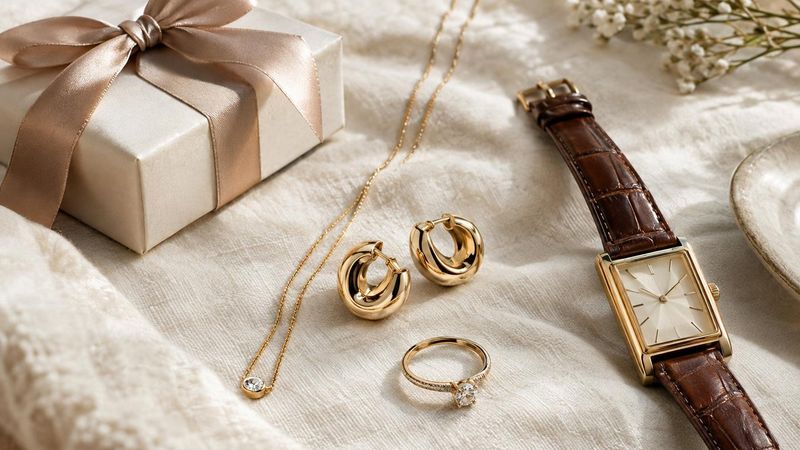
Jewelry has a way of outlasting the occasion it was bought for. A pendant, a watch, a pair of gold hoops: chosen well, they stop being objects and start marking birthdays, promotions, and ordinary weeks alike. That durability is why roundups of the best jewelry gifts keep circling the same categories each year, even when the individual pieces change entirely.
The jewelry team at Vogue built its 2026 gift edit around that premise, sorting candidates into a curated, price-tiered blueprint instead of a single headline pick. The list doubles as a map of the luxury jewelry market, from charm brands to heritage houses, and of what separates a piece worn twice from one worn for decades.
Inside the 2026 Jewelry Gift Edit: Three Spending Tiers
The edit labels its price bands thrills, splurges, and indulgences, and each one buys a different kind of jewelry. Under $300 sits the entry tier, treated as thoughtful rather than throwaway: vermeil, sterling silver, crystal, and charms. Pandora’s oversized dangle charm is listed at $190, the Mejuri Lucia necklace at $178, and the Aurate earrings made with Molly Dickson at $268. Swarovski’s Hyperbola earrings land in the same range. Personality carries these picks, not carat weight.
The middle range, to roughly $1,500, is where everyday fine jewelry begins: solid gold, onyx beads from Sophie Buhai, cord necklaces from Charlotte Chesnais, and direct-to-consumer names such as Mejuri and Brilliant Earth. The Brilliant Earth Sol diamond ring is listed at $1,650, a step above that band. Prices in Vogue‘s edit are snapshots, since gold and diamond markets move. Above $5,000, the logic shifts from material to heritage: the Cartier Tank Louis Cartier watch at $9,300, Bulgari Tubogas earrings at $7,500, and the Elsa Peretti feather ring at Tiffany, $4,500.
Eight Jewelry Gift Archetypes That Outlast the Season
Strip out the product names and the edit resolves into eight recurring roles a jewelry gift can play. Editors return to them because they answer the same questions each year, whether the recipient is a minimalist, a collector, or someone who never takes a piece off.
- Charming pendant: personal, talisman-like pieces that can be added to over time.
- Diamond ring: solitaires and slim diamond bands, worn as everyday jewelry rather than bridal only.
- Layering piece: chains designed to stack into a signature look.
- Classic timepiece: Tank-style watches that read as jewelry first and function second.
- Everyday statement: sculptural gold that works with denim and evening wear alike.
- Collector’s item: designer-signature jewels, with the Peretti feather as the benchmark.
- Festive drops: party-ready earrings built to survive past one holiday season.
- Minimalist must-have: quiet gold with small stones, like the Lié Studio Julie earrings at $370.
How Jewelry Became a Styling Tool in Fashion
Gift edits describe objects. Fashion shows how they get worn, and jewelry has taken on more of the styling load in collections and campaign imagery. Sculptural earrings anchor bare necklines. Layered chains sit over knitwear and tailoring. Watches appear as deliberate accents rather than timekeeping afterthoughts, which explains why the Tank silhouette keeps returning to gift edits.
Fine jewelry on models in editorial and advertising work has blurred the line between special occasion and everyday, with pieces once reserved for evenings styled against T-shirts and denim. That shift makes sculptural gold and simple diamond studs easier gifts to justify, and it gives jewelry wardrobe weight that used to belong to bags and shoes.
Matching the Jewelry Gift to the Person
Style archetypes speed up the decision. A minimalist gravitates toward one good chain, small hoops, or a slim watch. A maximalist wants volume, from stacked rings to bold pendants. Someone with vintage leanings responds to signed pieces and design history, the territory where names like Peretti and Bulgari keep their pull. Trend-led recipients wear the newest shape first, which makes an under-$300 accessory a safer bet than a trend piece priced into four figures.
Lifestyle matters as much as taste. Heavy drops suit a full social calendar, while flat-back studs suit long workdays and frequent travel. Metal choice deserves a direct question: solid 14k or 18k gold stands up to daily wear in a way that plating does not, and anyone sensitive to base metals is safest with solid gold, platinum, or titanium. With diamonds, lab-grown and mined stones share the same optical and chemical properties. The difference is origin, and certification matters wherever real money is involved.
Turning a Jewelry Gift into a Future Heirloom
Heirloom status comes from consistency of wear more than price. Engraving, birthstones, and pieces with a story attached get reached for more often, which is how an inexpensive charm outlasts a five-figure impulse buy. Sizing is the practical hurdle, especially for rings and bracelets: many brands publish printable guides and offer resizing or exchange windows, which makes a surprise gift less risky. Return policies and warranties vary widely, so read them before wrapping.
Care keeps value intact. Store pieces separately to avoid scratches, remove rings and chains before the gym or the pool, and have prongs checked once a year on anything set with stones. Higher-value pieces usually belong on a home insurance policy or a scheduled rider, with receipts and certificates stored alongside the purchase. None of that is glamorous, and it is what keeps a 2026 gift wearable decades later.