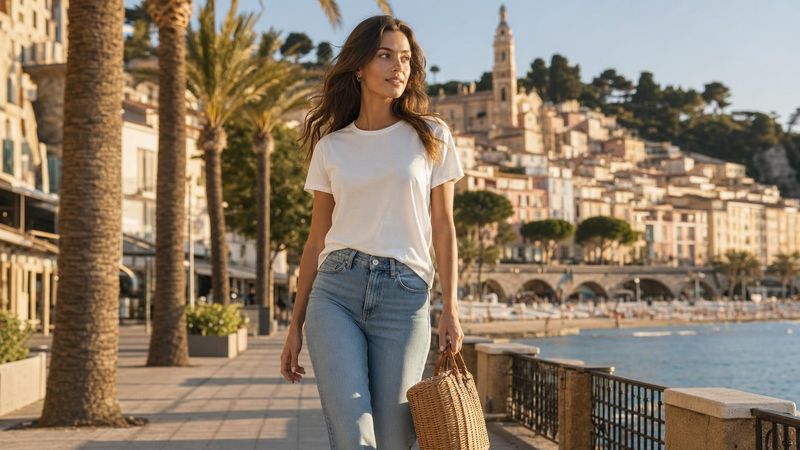
Scroll through resort editorials, vacation campaigns, or model street style in warm weather and the same image keeps popping up: a woven basket on the crook of a bare arm. It might be a logoed raffia hobo, a sculptural bamboo tote, or a tiny wicker top handle, but the reference point is the same every time – the Jane Birkin basket bag.
That simple market basket has quietly become one of fashion’s strongest visual shortcuts for escape. It tells a whole story in one prop: off duty, out of office, maybe on the Riviera. That is why it shows up in accessories pulls for resort shoots, why creative decks still paste in Birkin’s 1970s photos, and why so many models keep some version of a straw bag in their everyday rotation.
The Jane Birkin basket bag, from flea market to fashion language
Long before the leather Hermès Birkin, Jane was known for a humble wicker basket she picked up at a market. She carried it everywhere – to protests, premieres, beach days, grocery runs – with no attempt to baby it. In pictures from Cannes or Paris streets, the basket is often overflowing with records, flowers, or a sweater, like a candid snapshot rather than a styled moment.
Those images became a moodboard staple because they solved a styling problem: how to make a look feel effortless in one move. A white tee and jeans, a slip dress, a trench – add a basket and the outfit suddenly looks like a life, not just clothes. Stylists still refer to this as the “Birkin basket energy”: slightly messy, very real, instantly evoking summer in France even if the shoot is on a rooftop in Brooklyn.
Brigitte Bardot’s seaside baskets and 1960s Riviera films layered onto that mythology, but it is Birkin’s casual insistence on using the same bag for everything that resonates in 2020s fashion. Modern pieces like the Clare V. Pot de Miel lean into that lineage on purpose, echoing the rounded, open weave of her original market find while updating proportions and hardware for today.
Why straw bags are in every resort and vacation story
Straw handbags can feel like a new obsession because they spike each spring, yet the category has deep roots. Fashion historians trace their rise to the 1940s, when leather trimmed straw baskets and openwork totes became status accessories in resort towns like Palm Beach, the Hamptons, and California beach communities. A woven bag signaled that you were not commuting, you were vacationing.
That resort code never really went away. When a creative director briefs a summer campaign now, there is almost always a line that boils down to “we need at least one Birkin basket moment.” Woven bags communicate heat, ease, and time off more clearly than any printed slogan tee. Whether the team is shooting in Ibiza, Bali, or a hotel pool in Miami, a straw or raffia bag instantly tells the viewer this is a getaway story.
They are also incredibly adaptable on set. The same style can read bohemian with a crochet dress, polished with a blazer over shorts, or playful next to a pool float. That flexibility is why brands as different as Loewe, Chloé, Coach, Prada, and high street labels all build straw options into their summer lines – stylists can make them fit almost any character in an editorial or campaign narrative.
Straw, raffia, rattan: what stylists actually look for
On call sheets and showroom pulls, “straw bag” is really shorthand. The most common fibers are raffia – a flexible, durable palm leaf – and various woven grasses grouped under “straw.” Rattan, a woody vine, shows up in more rigid, basket like shapes. “Wicker” is the name of the weaving technique, not a material, and usually describes the stiff, structured baskets that hold their shape on a windy beach.
Those details matter when you are packing trunks for location. A soft raffia hobo, like DeMellier’s handwoven styles, slouches beautifully in pictures and packs flat in a suitcase. A rattan or wicker box bag holds its silhouette even when it is stuffed with props, and sits upright on a bar or pool deck, which is gold for product close ups. Many newer designs add leather straps, metal frames, or branded hardware so they feel city ready once the campaign is over.
Silhouette is the other big decision. Oversized totes are used when the story is “family at the beach” or long haul travel. Medium top handles and framed styles – think Coach’s Kisslock or straw versions of vintage doctor bags – are pulled for more polished resort looks and wedding guest imagery. Tiny straw clutches and novelty shapes, from fish and shells to shrimp embroidered totes, do the heavy lifting in night scenes and playful resort editorials where the bag almost becomes a character.
From the runway to real life: what models carry off duty
Look at airport candids and Fashion Week street style and you will see the same codes repeated. Models pair roomy woven shoulder bags with trench coats and boots at departures, because a straw hobo is light, crushable, and fits chargers, skincare, casting cards, and a book without feeling like a work tote. Angelina Jolie using a woven bag as a travel carryall fits this pattern perfectly.
On off duty days or between shows, the Jane Birkin basket bag formula still wins. Denim, a white tank, ballet flats or sneakers, and a medium basket feel put together without trying too hard, which matters when you might be photographed heading to a casting. Round crossbody styles and mini bucket bags leave hands free for coffee and phones, which is why they are popular in city summer looks as well as on location.
For an aspiring model or stylist, it helps to think practically as well as aesthetically. Check the handle drop so the bag clears your arm in a blazer, and avoid pieces that are so stiff they bruise your hip after a day on set. Unlined straw can snag delicate clothes, so many pros keep pouches inside for make up and tech. A mid sized, neutral woven bag with a secure closure tends to earn its place in a suitcase season after season, which is exactly what Jane Birkin proved decades ago without ever trying to start a trend.