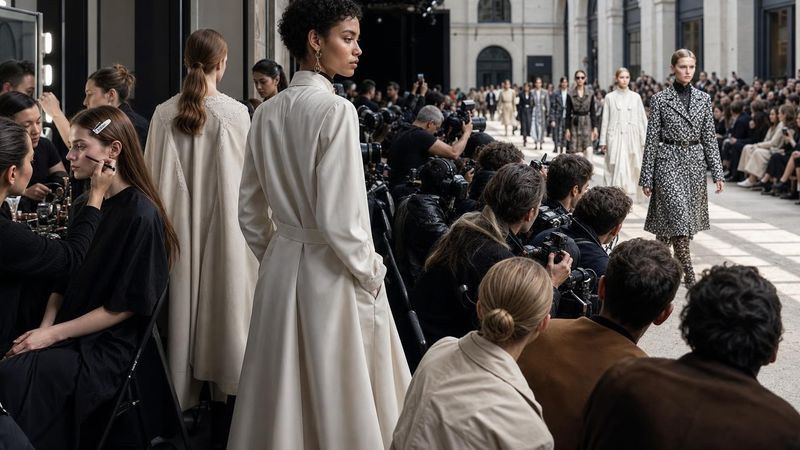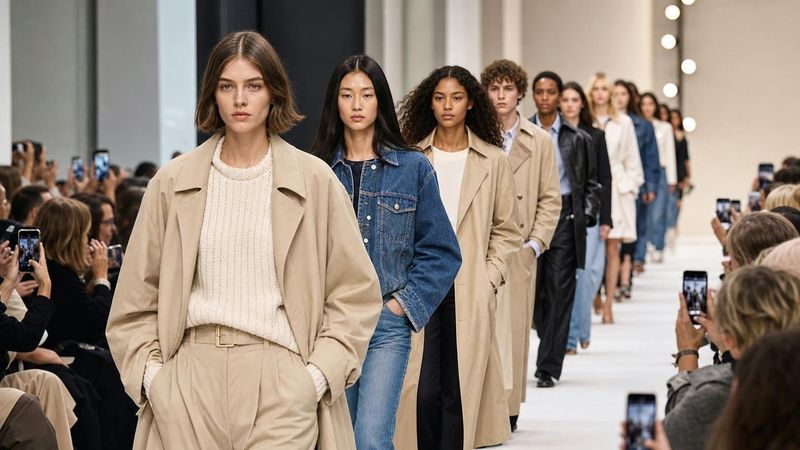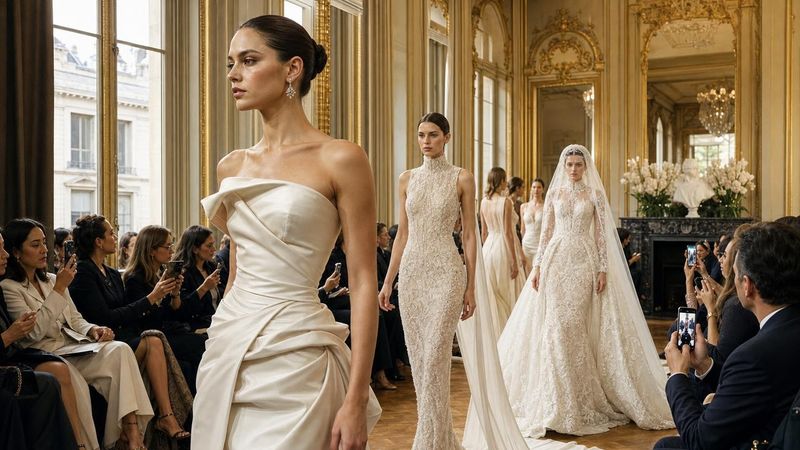
On a stacked Paris Haute Couture Week calendar dominated by headline debuts at Balenciaga et Jean Paul Gaultier, one of the most closely watched shows came from a tiny London-based label: Standing Ground. On July 6, 2026, Irish designer Michael Stewart brought his Fall 2026 haute couture collection to the Irish Embassy in Paris, a 150-seat room that still managed to pull in Anna Wintour and a front row of heavy hitters.
Expectations were high. Stewart had not shown in Paris since winning the inaugural Savoir-Faire award at the 2024 LVMH Prize, and he poured the entire 200,000-euro purse – “and then some,” as he noted – into this first official couture outing. The question circling editors and casting directors before the lights went down was simple : could an independent, two-year-old label stand its ground against the maisons?
Why this couture debut carried so much weight
The Fall/Winter 2026-27 haute couture week, running July 6 to 9, was pitched as a “newness” season, with Pierpaolo Piccioli’s first couture at Balenciaga and Duran Lantink guest-designing for Jean Paul Gaultier. Within that context, the Fédération de la Haute Couture et de la Mode granting Standing Ground guest status on the official calendar signaled serious institutional backing for Stewart’s sculptural vision.
The LVMH Savoir-Faire award in 2024 had already marked him out as a technician to watch. That 200,000-euro investment underwrote nearly two years of pattern-cutting, handwork and fittings in his compact London atelier. “Paris is where the work should be,” Stewart said of finally stepping into couture week. He described the last eighteen months as a study in cut and form, a period that raised expectations but also gave him time to refine the tall, stone-like silhouettes that have become his signature.
What Michael Stewart delivered on the runway
The Fall 2026 couture collection was tightly edited at around 28 looks, each one elongating the body into a kind of moving monolith. Stewart opened with tailored pieces structured by his signature covered beading : a gray jacket with scarf collar and hook-and-eye closures, followed by a pearl gray capelet-back coat that felt almost ceremonial. A razor-sharp black pantsuit showed he can translate that sculptural language into something a tech executive could plausibly wear to a board meeting.
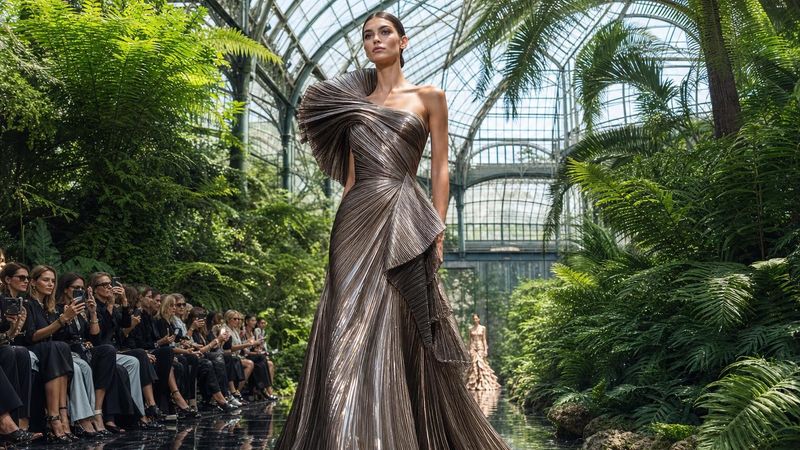
The evening story pushed his column dressing further. Beads in rock crystal and synthetic rubies traced sinuous paths down black velvet gowns, turning the models into vertical constellations under the embassy’s lights. Precision-molded bustiers, likened in reviews to car panels, cinched torsos into smooth, aerodynamic shapes. That corsetry links back to Stewart’s work with legendary corsetier Mr Pearl and, for this season, to a standout molded corset embroidered by Maison Vermont in a dense “cosmic crocodile” motif.
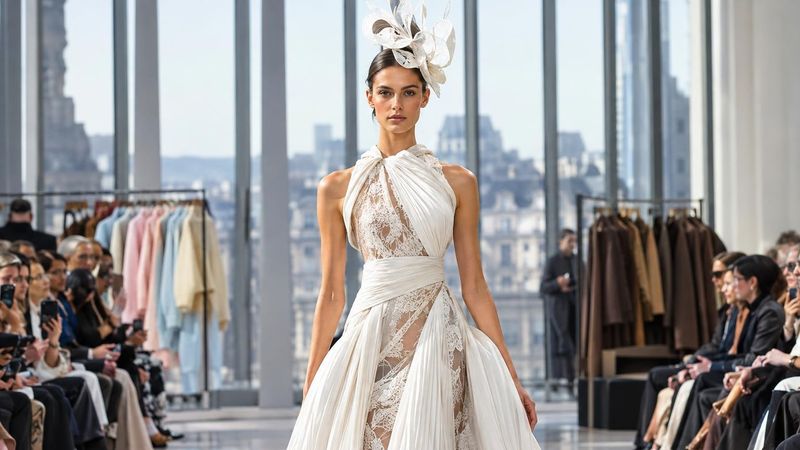
One of the night’s talked-about moments came when Kristen McMenamy closed the show in a sheer bridal gown cut from Carrickmacross lace sourced in Ireland. The blackberry-thorn-and-dragonfly motif took nine months for a group of lacemakers aged 21 to 95 to complete, folding a very old Irish craft tradition into this futuristic silhouette story. For casting directors and stylists looking ahead to awards season, that dress in particular read as instant red-carpet mythology.
Movement and casting underlined the “standing stone” idea. Piergiorgio del Moro chose models with statuesque proportions and controlled, unhurried walks, while movement director Emma Chadwick kept gestures minimal so the clothes did most of the talking. In such a small room, every micro-adjustment of posture was visible, giving aspiring models a masterclass in how to carry heavy, sculpted garments without breaking their line.
What this means for models, clients and Stewart’s next chapter
Backstage, Stewart insisted he would always prioritize the clothes over spectacle, and the show reflected that : no massive set, no gimmicks, just fabric, bodies and light. He worked with longtime stylist and consultant Tallulah Harlech, musical director Michel Gaubert, hair lead Duffy, nail artist Jenny Longworth and make-up by Daniel Sällström with Godmode Beauty to build atmosphere around that core idea. Production came via North Six and LH Projects, with PR from Lucien Pagès, underlining how a small brand can still plug into top-tier fashion infrastructure.
For models, Standing Ground’s arrival on the couture schedule opens a niche : clients and casting directors now associate the label with extreme verticality, corseted torsos and ultra-clean jersey draping, a look that rewards precision walking and a calm, almost statuesque presence. For clients and red-carpet stylists, the message is clear : these are dresses that photograph powerfully from every angle, with enough handwork – from Maison Vermont embroidery to Carrickmacross lace – to satisfy couture purists.
Stewart, meanwhile, is already thinking bigger. “Can you imagine what I could do if I had a budget ?” he said with a wry smile after the show. Given how fully he met the great expectations placed on this modestly staged debut, few in that embassy room doubted he will get the chance to find out.