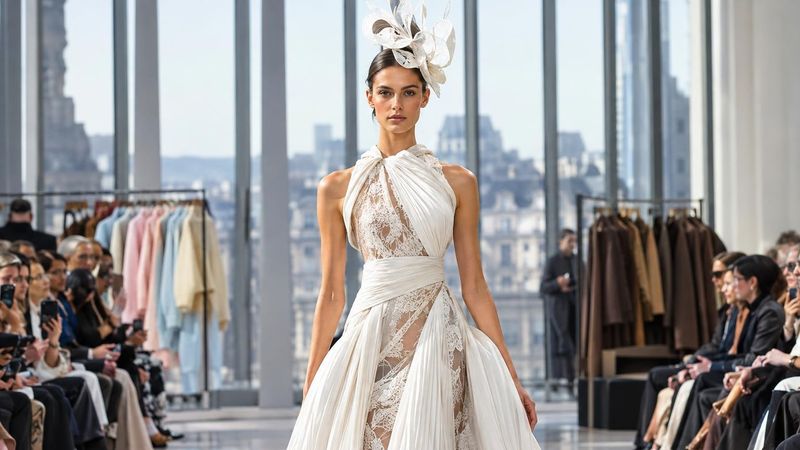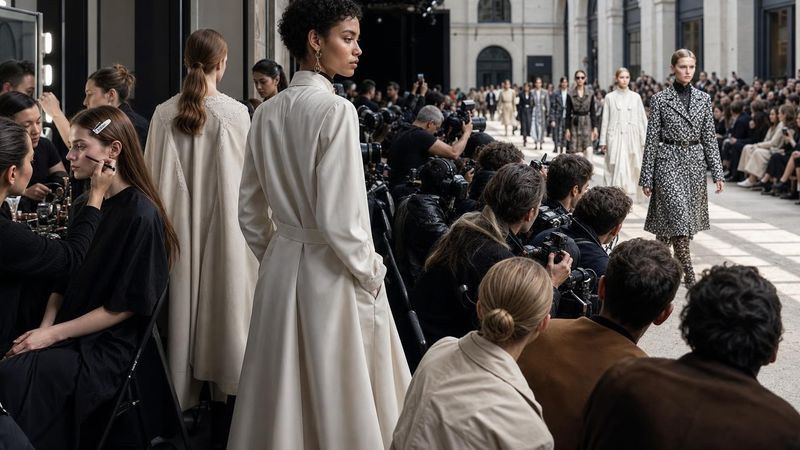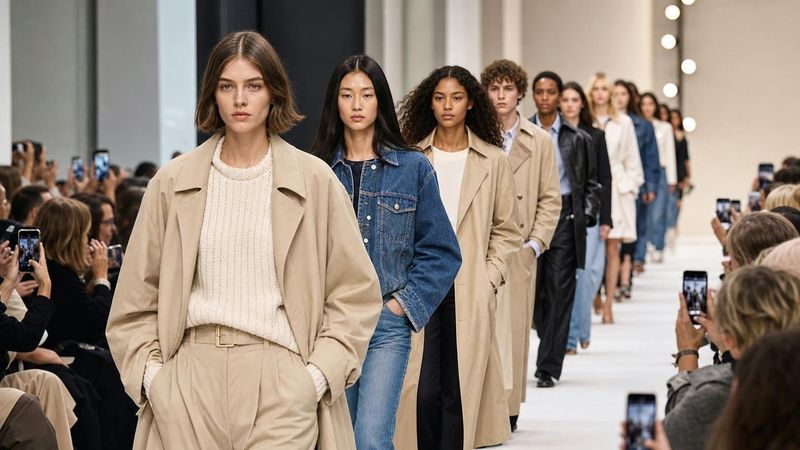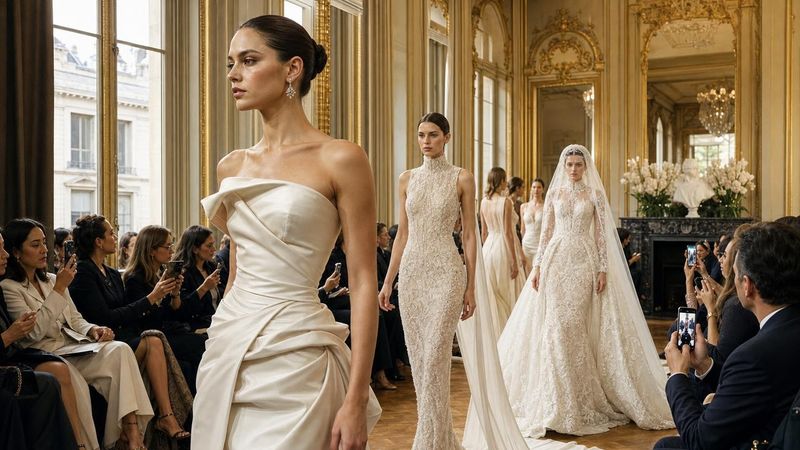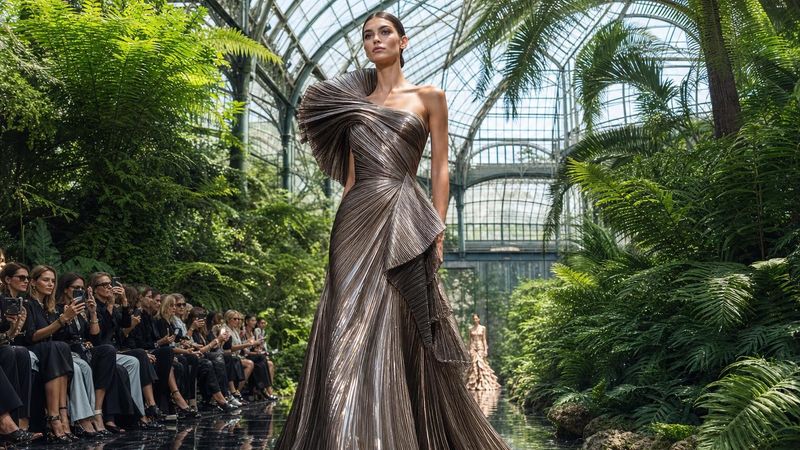
On the opening day of Paris Haute Couture Week, the gardens of the Musée Rodin turned into a dense, man‑made jungle for Dior Fall 2026 Couture. Under a greenhouse structure packed with towering ferns and palms, Jonathan Anderson sent out his second haute couture collection for the house, framing it as a study in how far fabric can go when it behaves like sculpture.
The season, officially Dior Haute Couture Fall Winter 2026‑2027, revolves around American sculptor Lynda Benglis. Where Benglis twists and pours metal, wax or latex until flat matter becomes solid form, Anderson answers in cloth, using couture techniques so that dresses, coats and bags read less like garments and more like three‑dimensional objects in motion.
Dior’s Sculptural Garden At The Musée Rodin
The set did a lot of the talking. A black‑lacquered runway reflected the surrounding forest of tree ferns, so each look appeared to glide over a wet, inky surface while the foliage created a kind of natural proscenium. The show packed 65 exits into this “pleated forest” tableau, the greenery echoing the curling rhythm of the clothes as they unrolled down the catwalk.
Inside the museum, the project continued with a temporary installation titled Grammar of Forms. There, the new couture pieces sit alongside archival Dior and works by Benglis, turning the collection into part of a broader conversation about how bodies, drape and volume can share space with sculpture. Metallic looks, in silver, gold and bronze, quietly picked up on that museum context, catching the light like cast pieces mounted in a gallery.
From Flat Cloth To 3D Object
Dior’s show notes describe haute couture and Benglis’s practice as sharing a basic method : start with something flat and coax it into volume through labor and gesture. Anderson leans on hand pleating, knotting and draping as a kind of internal armature that replaces heavy underpinnings. Some columns feel almost Fortuny‑like in their vertical ribs, while wrapped jerseys and twisted knits nod to the sculptural lineage of Madame Grès more than to traditional New Look stiffness.
Surfaces are worked as intensely as structure. Silver nets can read like chicken wire from a distance, turning evening dresses into filigreed cages of light. Crinkled metallics and tightly controlled plissé bows add ripples and edges that look frozen mid‑movement, especially on molten copper and pewter gowns that resemble liquid metal stopped in time. The India thread runs through accessories and detail work : Benglis’s long relationship with Ahmedabad and her Peacock Series inspires bright beading and saturated florals, while fragments of eighteenth‑century chintz and indiennes are inserted into Petit Dîner clutches and mini Lady Dior bags. New shapes such as the Dior Cigale and Dior Bow bags, along with jewellery produced between Jaipur and French workshops in stones like onyx, rock crystal and carnelian, extend the idea of wearable sculpture into the hand and around the neck.
Casting, Beauty And The Model’s Role In Couture Sculpture
Casting director Ashley Brokaw built a line‑up capable of carrying all that structure without losing ease. Laura Kaiser opened the show, a key sign of trust from a house like Dior, while Kaja Krawczyk closed in the final look, sealing the collection’s message. Between them, familiar runway leaders such as Mica Argañaraz, Mona Tougaard, Fei Fei Sun, Julia Nobis and América González shared the space with newer names including Agel Akol, Rejoice Chuol and Sunday Rose, giving the “forest” a mix of authority and fresh energy that clients and editors will recognise instantly.
Beauty underlined the sculptural brief rather than competing with it. Peter Philips kept skin luminous and almost bare, with just a soft blush fused into base and a baby‑pink gloss on lips, so the architecture of the clothes stayed in focus. Eyes carried the set’s greenery onto the face in chartreuse and green‑gold metallic shadow or graphic deep‑green liner, sometimes topped with glitter that flared as models stepped from a dark entry box into the fern‑filled light. Guido Palau styled hair either long, straight and tucked back or under metallic silver and gold headpieces that echoed the pleated hats and metal dresses. For models, the challenge was to move slowly enough to let heavy lamé, intricate folds and swaying fringe perform, while keeping posture clean and lines sharp. It is the kind of walk that can define a season for a model, and a reminder that at Dior right now, knowing how to wear structure is as important as knowing how to sell a dress.