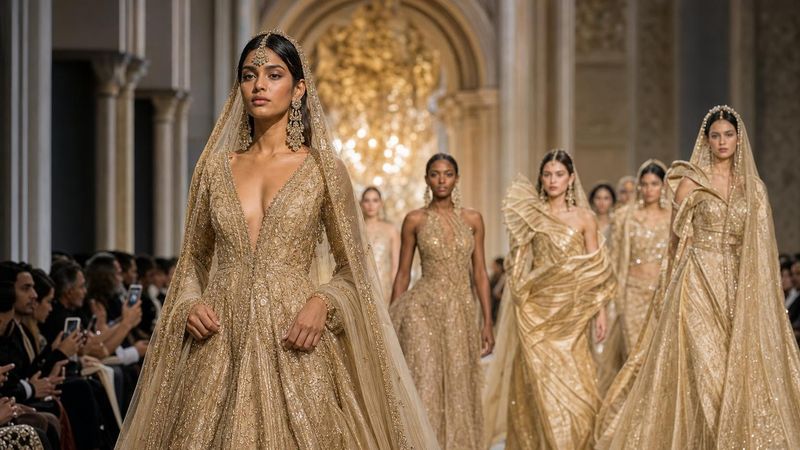
Manish Malhotra’s Fall 2026 Couture collection, titled “Maa,” did more than mark his debut on the official Paris Haute Couture calendar. It effectively lifted his long‑dominant bridal language out of Indian wedding catalogs and into the rarefied space where couture ideas are set for the world. For anyone watching bridal‑leaning campaigns or luxury occasionwear clients, this show functions like a mood board for the next few years.
Staged in Paris on July 8, 2026, as part of a roughly thirty‑house schedule, “Maa” arrived in the same week as headline debuts at Balenciaga and Jean Paul Gaultier. Yet Malhotra’s runway stood apart for how openly it embraced wedding codes: veils, sweeping trains, gold tissue, lehenga‑gown hybrids. Even the major fashion archive hosting the runway images repeatedly tags looks as “wedding dress,” “bridal veil,” or “evening gown.” That clarity of intent is exactly why the collection matters so much to models, casting directors, and the ultra‑wealthy clients who live in this world.
Why Manish Malhotra’s Fall 2026 Couture debut matters for bridal couture
For decades, Manish Malhotra has been shorthand for Bollywood bridal fantasy. His ateliers dress celebrity weddings, film heroines, and industrialist families across India and the diaspora. Taking that aesthetic to Paris Haute Couture Week, under the umbrella of the Fédération de la Haute Couture et de la Mode, is not just a status upgrade. It signals that Indian bridal couture is being treated as an author of global luxury, not a regional niche.
Indian ateliers have long produced embroidery and handwork for European maisons. What shifts with Fall 2026 Couture is that designers from India, including Malhotra, appear on the calendar under their own names. Industry coverage of the July 2026 season notes four Indian couturiers showing in the same week, reflecting how significant the Indian bridal market has become. It is one of the largest couture bridal segments worldwide, and Paris is now a showroom where those ideas are broadcast to buyers, stylists, and brides from Mumbai to Doha to Los Angeles.
The concept of “Maa” – centered on motherhood, memory, and legacy – taps directly into how high‑net‑worth families think about weddings. These are not one‑day parties. They are multiday rituals where clothing often references heirlooms, matrilineal jewellery, and family textiles. Malhotra translates that emotional brief into couture language using handwoven fabrics, dense metallic embroidery, zardozi, sequins, and sculptural silhouettes that feel ready to be archived as future heirlooms.
From a business point of view, positioning this narrative on the couture stage tells clients something clear: the same house that built its name on Bollywood bridal is now offering a Paris‑validated, made‑to‑measure experience. For stylists and personal shoppers, it turns Manish Malhotra Fall 2026 Couture into a safe reference when building ultra‑high budgets for trousseaux, receptions, and society weddings.
Inside “Maa”: bridal-coded couture and what it means for campaign casting
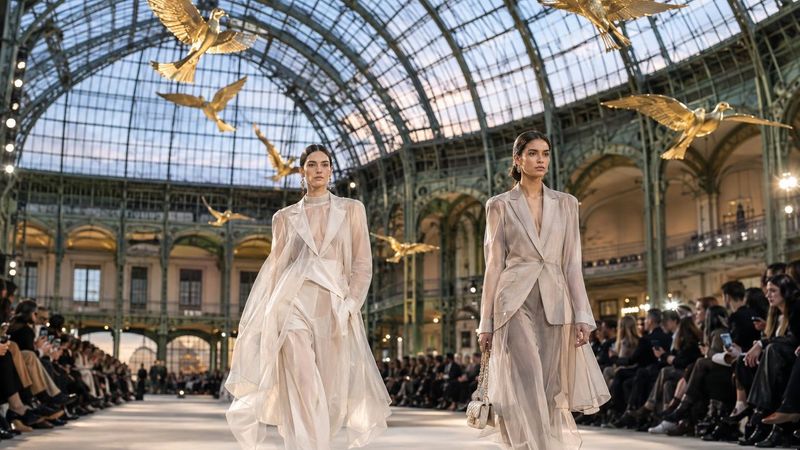
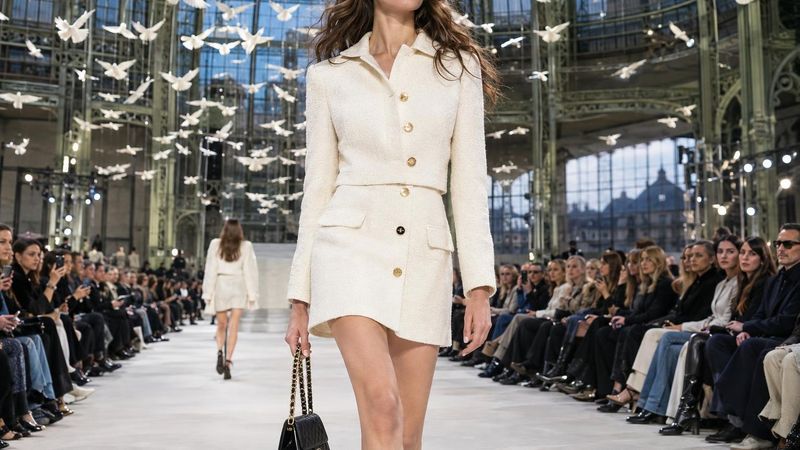
Scroll through the forty‑plus looks in the Fall 2026 couture gallery and a pattern appears quickly. Many silhouettes are essentially wedding‑adjacent: ivory and champagne gowns with lehenga volume, trailing veils, caped shoulders, gold tissue saris translated into structured eveningwear. These are clothes designed to photograph in motion – on a mandap, a staircase, or a red carpet – which makes them perfect source material for campaigns.
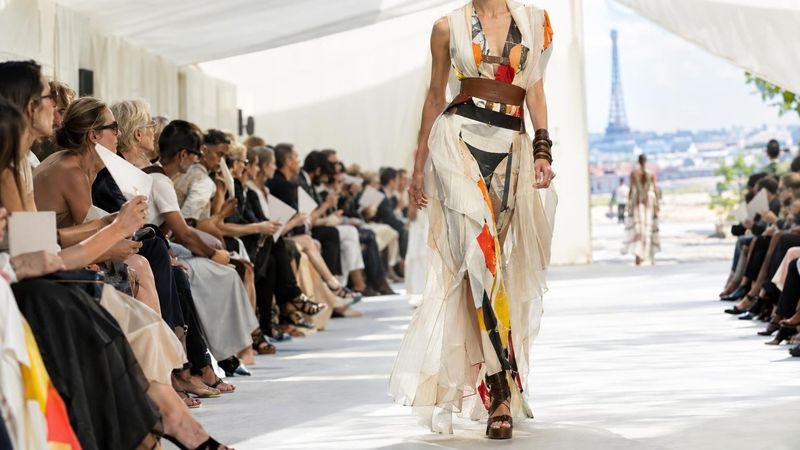
The fabrics and embellishments are the same artisanal techniques that power Malhotra’s bridal business, but scaled to couture expectations. Borders are thicker, motifs more sculptural, and surfaces almost jewel‑like. That matters for editorial and advertising imagery because metallic embroidery and sequins catch light in a way that rewards close‑up shots: wrists lifting a veil, profiles framed by beaded hoods, trains spilling over marble floors. Expect jewellery and beauty brands to borrow these framings heavily.
Models.com’s cast list for the show underlines how carefully the runway was curated as a casting statement. Astrid Voss opened, Akur Goi closed, and the line‑up mixed South Asian, Black, Asian, and European faces, including Neelam Gill. The message is that Malhotra’s bride is global. She might be Indian or diaspora, but she might also be a Hollywood actress, a Middle Eastern royal, or a European society fixture choosing Indian couture for a civil ceremony.
For models and agencies, the profiles favoured here are a useful guide. Faces are clean and expressive rather than aggressively edgy, with bone structure that works both for bridal beauty close‑ups and full‑length couture shots. Many looks rely on long hair that can carry veils, jewellery, or ornate hairpieces. Movement is poised and unhurried, which is essential when walking in heavily embroidered skirts and extended trains. Portfolios that show a model handling volume, weight, and traditional draping while still selling emotion will speak directly to the briefs this show is likely to generate.
Celebrity and client casting around the show feeds the same narrative. High‑profile Indian figures, including Isha Ambani, appeared in custom gold tissue pieces styled with serious heirloom jewellery, effectively modelling the “real bride” or “real client” version of what was on the runway. International actresses and models in the front row or after‑party images act as soft test cases for how “Maa” might read on Western red carpets.
From brides to red carpets: how luxury occasionwear clients will wear “Maa”
On the client side, Manish Malhotra Fall 2026 Couture maps almost directly onto three key groups. First are Indian and non‑resident Indian brides planning multi‑event weddings. For them, the most bridal‑coded ivory and champagne looks translate into engagement, phera, or reception outfits, while deeper jewel tones and metallic capes pivot towards sangeet nights or cocktail functions. The “Maa” theme, with its focus on legacy, encourages styling with family diamonds, vintage gold, and passed‑down textiles.
The second group is Middle Eastern and other ultra‑high‑net‑worth clients who already treat Indian couture as a go‑to for gala wear. Modest‑leaning silhouettes in the collection – high necklines, long sleeves, capes that cover the upper body – make sense for palace weddings and state dinners once they are custom‑lined and adjusted. The gold tissue and heavy zardozi that read as bridal in India can easily become statement eveningwear in Doha or Riyadh.
The third cluster sits in Western markets, where stylists are increasingly open to Indian designers for red carpets and society weddings. Here, lehenga‑gown hybrids from “Maa” can become reception dresses, city hall ceremony looks, or awards‑season gowns. Veils can be reimagined as detachable cape trains, and ornate blouses re‑cut into more familiar bodice shapes. When these outfits hit magazine covers or global carpets, they in turn reinforce the idea that Indian bridal couture belongs in the same conversation as Dior or Chanel eveningwear.
All of this loops back into casting and campaigns. Hotels, jewellery houses, beauty brands, and even luxury wedding planners looking to refresh their visuals after 2026 will find in “Maa” a ready‑made vocabulary: intergenerational storytelling, brides with their mothers, close‑ups of hands adjusting vintage bangles over couture cuffs, diverse brides in similar silhouettes styled for different cultures. Models who can inhabit that world convincingly – elegant carriage, emotional range, and comfort in both Indian and Western styling – are likely to be front of mind when those briefs land.