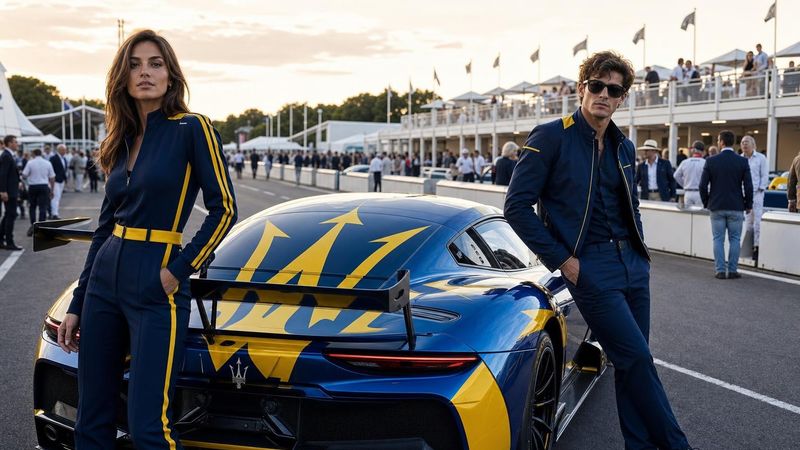
Maserati just turned its GranTurismo into the Project GT4, a full race car unveiled at the 2026 Goodwood Festival of Speed, and the move reaches far beyond the paddock. For car media, the story is all about weight reduction, aero and lap times. For fashion and modeling, this is the start of a fresh luxury automotive narrative that will need faces, attitude and a lot of content.
Built to enter the GT4 category from 2028, the Maserati GranTurismo Project GT4 is lighter, louder and more graphic than the road car, wrapped in a centenary livery that almost behaves like couture. That combination of racing hardware and highly designed visuals usually triggers full launch campaigns, trackside lifestyle shoots and social storytelling, which means new work streams for both editorial and commercial models who can move comfortably in a motorsport setting.
Inside Maserati Project GT4: From Road GranTurismo To Grid Weapon
The race car starts with the new Maserati GranTurismo coupe and strips it back for the circuit. Maserati Corse keeps the aluminum platform but drops roughly 400 kg, switches to rear wheel drive and installs the 3.0‑liter Nettuno V6 biturbo in a front‑longitudinal layout. That engine uses pre‑chamber combustion derived from Formula 1 technology and, in competition tune, can exceed 700 hp, which gives the brand a credible performance story to tell in any campaign.
Inside, the cockpit still hints at the road GranTurismo but swaps comfort for competition: roll cage, homologated race seat, race fuel tank and a dedicated braking system built for long stints. Development input from multi‑title racing driver and chief test driver Andrea Bertolini underlines that this is not styling exercise only. For photographers and stylists, this kind of street‑to‑track transformation is gold, because it lets them frame a model between polished Italian luxury and raw mechanical drama.
A Centenary Trident That Reads Like A Fashion Brief
Project GT4 launches in a year when Maserati celebrates 100 years of the Trident and a century of racing, and the livery makes that anniversary visible from across the paddock. A giant Trident graphic runs from roof to rear, while one hundred small blue Trident symbols repeat across the bodywork. A white band on the nose nods to some of the brand’s most iconic race cars, and the deep blue and yellow palette pays tribute to Modena, where the project was developed.
That kind of graphic language almost writes the moodboard for a fashion shoot. The color blocking encourages sharply tailored outerwear, race‑inspired stripes and bold monochrome looks against the car’s blue and yellow fields. The oversized logo treatment feels close to current runway plays on branding, so a model framed against the Trident can echo that energy without needing heavy wardrobe logos. For editorial teams, the centenary story adds depth: archive‑to‑future narratives, Italian heritage styling and then‑and‑now layouts sit naturally around this car.
How Project GT4 Can Turn Into Real Jobs For Editorial And Commercial Models
On the marketing side, Project GT4 extends Maserati’s modern motorsport program, which already includes the GT2 racer that returned the brand to competition in 2023 and the track‑only MCXtrema. That creates a multi‑model ecosystem that needs visuals for each launch, plus combined stories about the full grid of Trident race cars. Models can expect classic hero campaigns around the GranTurismo Project GT4 itself, but also ensemble imagery where car, driver and lifestyle talent share the frame.
Beyond the flagship shoots, there is the quieter but steady layer of commercial work. National distributors and dealers will want local launch events, outdoor campaigns and social content built on global Project GT4 assets. Customer GT4 teams need visuals for their own partners, from watch and eyewear brands to fuels and tires, often casting models for paddock‑chic lifestyle images and short‑form video. Goodwood and later GT4 race weekends double as stylish social scenes, so magazines and digital titles can commission trackside fashion stories that call for models who look at ease in technical outerwear, race suits or elevated off‑duty looks around high‑performance hardware.
For talent, the entry point is preparation. Portfolios that already show ease around cars, movement in structured clothing and a confident, athletic presence tend to stand out when clients brief automotive work. Test shoots using industrial locations, sharp tailoring and sporty accessories can signal that potential even without access to a supercar. Staying visible on agencies’ commercial and lifestyle boards, following Maserati, the main GT4 series and key automotive photographers, and being open to travel for European shoots all help. The first Project GT4 races may run in Europe, but the images, films and social clips will circulate globally, including across the United States, keeping the door open for models ready to plug into this new chapter of luxury motorsport storytelling.