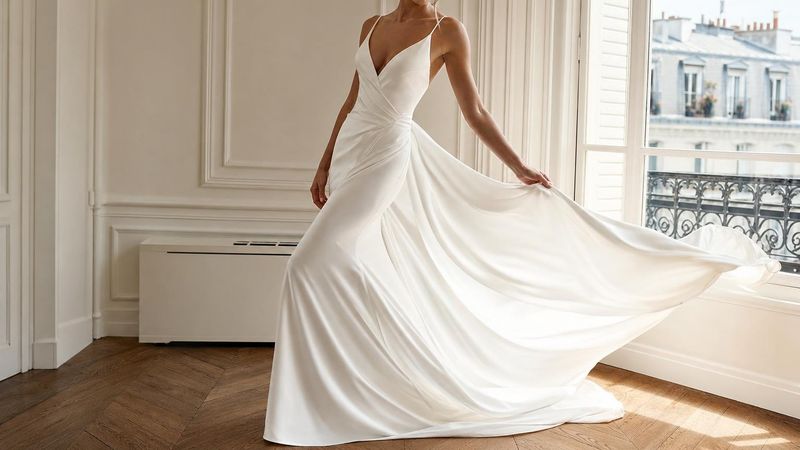
Scroll through any bridal editorial, campaign, or even a jewelry ad right now and a pattern jumps out: the dress is often deceptively simple. Instead of layers of tulle and heavy beading, you see clean silk slips, crisp columns, or sculpted strapless gowns with almost no decoration.
Simple wedding dresses have shifted from “safe option for minimalist brides” to a deliberate power move in how bridal fashion is shot and cast. For creatives, they solve real problems in imagery, storytelling, and global marketing. For models, they quietly change what gets you booked on a bridal job.
What Counts as a Simple Wedding Dress Today
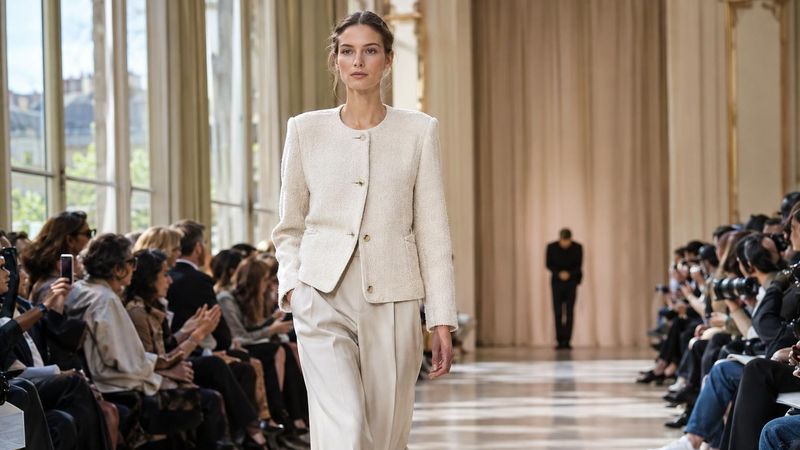
“Simple” no longer means plain. The modern minimalist wedding dress is defined by clean lines, streamlined silhouettes, and pared-back details. Think silk charmeuse slips that skim the body, architectural column gowns with a subtle train, or structured A-line dresses with almost no embellishment.
With this kind of gown, fabric and fit do the heavy lifting. Designers from Danielle Frankel and The Row to Khaite, Ralph Lauren, Reformation, and Maison Margiela are all leaning into this idea: if the textile is beautiful and the cut is precise, you don’t need much else. Every seam, dart, and strap placement shows on camera, which is exactly what makes these pieces feel expensive and “quiet luxury.”
The aesthetic pulls heavily from ’90s minimalism. Carolyn Bessette-Kennedy’s Narciso Rodriguez–designed slip dress is still on countless moodboards because the look hasn’t aged; it’s a clean, bias-cut silk gown, nothing more. That image taught a generation of editors and art directors that a wedding dress can be both understated and iconic.
Why Minimal Gowns Are a Dream for Editorial Shoots
For photographers and stylists, a simple wedding dress is like a blank, sculptural canvas. Its smooth surfaces create bold shapes against almost any backdrop, from a city hall staircase to a windswept cliff. In wide shots, you get strong negative space around the bride. In tight crops, there’s no distraction from the hands, neckline, or jewelry.
Fabrics like silk satin, hammered satin, and crepe also love the camera. They catch highlights, move fluidly in the wind, and read beautifully in both color and black-and-white. A clean halter gown or slip will show every shift of the body, which adds life to still imagery and short-form video.
There’s also a business angle: images built around simple dresses age slowly. Because there are no trendy lace patterns or extreme silhouettes, brands can run the same campaign assets on their site, in lookbooks, and across social for several seasons without the visuals feeling dated. That “timeless” quality brides want in their wedding photos is exactly what marketing teams want in their content library.
How Simple Dresses Shift the Casting Conversation
Minimalist gowns quietly change what casting directors look for on a bridal job. When the dress isn’t shouting, the model has to carry the frame. Expression, posture, and chemistry (especially in couple shots) become the main story.
In practice, this means a simple slip or column makes it easier to read a model’s lines: the way her shoulders relax, how she walks, how she interacts with a partner. There’s no voluminous skirt hiding leg movement or heavy beading stiffening the bodice. For casting tapes and test shoots, agencies often favor clean, body-skimming white looks for exactly this reason.
Simple silhouettes are also more adaptable across sizes, heights, and markets. A sculpted strapless ballgown with minimal seam detailing or a long-sleeve satin column can be cut to flatter a wide range of bodies without changing the overall aesthetic. For global campaigns that need one visual language to work in different countries and cultures, this kind of restraint feels inclusive and neutral in the best way.
Styling a Simple Dress for Maximum Storytelling
The real secret weapon of a pared-back bridal look is how easily it transforms. Remove excessive detailing from the gown and you suddenly have space to push accessories, hair, and makeup much further.
One silk dress can support an entire campaign: styled once with a dramatic cathedral veil and soft chignon for a classic bride; again with a short birdcage veil and red lip for a city elopement story; then with loose hair, bare feet, and minimal jewelry for a beach or backyard angle. Editors love this because it stretches a wardrobe budget and keeps a story coherent.
For models, that flexibility means you’re often shooting multiple “characters” in the same dress. You might move from refined to playful to editorial within a single day, purely through changes in veil, earrings, shoes, and beauty direction. The simpler the gown, the more your face and body sell each shift in mood.
What This Means for Aspiring Bridal Models
If you’re building or updating a book with bridal ambitions, the current trend is an advantage. Simple wedding dresses put the focus squarely on you, which is exactly what agencies and clients want to see.
Strong portfolio images now often show:
- A clean ivory slip or column in natural light, highlighting your walk and movement.
- A structured minimalist gown shot full-length and in close-up to show how you handle both drama and intimacy.
- City hall or “modern courthouse” setups that feel like real elopements rather than fantasy princess scenes.
When you test, lean toward unfussy silhouettes in good fabric and avoid overly sparkly or heavily embellished pieces. Practice subtle, believable emotion instead of exaggerated poses; quiet luxury bridal imagery is about micro-expressions, soft smiles, and the way you inhabit negative space.
For fans and fashion-watchers, expect simple wedding dresses to stay front and center in editorials and campaigns for a while. They line up with everything else happening in fashion – from minimalist red-carpet looks to stripped-back ready-to-wear – and they give creative teams and models more room to work. In the current bridal landscape, the cleanest dress in the room is often the one with the most power behind it.