That tiny half moon of skin under the eye has quietly become one of beauty’s biggest businesses. From cooling patches on model call sheets to luxury creams that cost as much as a dress, under-eye care now sits at the crossroads of skincare science, fashion imagery and serious money.
Open any pharmacy shelf or pro makeup kit and this area has its own arsenal: gels, serums, masks, patches, brightening correctors. At one end, luxury houses book K-pop idols to sell an eyeliner or Stylo Contour des Yeux. At the other, a minimalist balm created on a windy island claims to replace every “soin contour des yeux” in your routine. So how did a strip of skin a few centimeters wide turn into such a flourishing market.
How the eye contour turned into a beauty gold mine
The skin around the eyes is physiologically different. It is often described as 3 to 5 times thinner than the rest of the face, with fewer sebaceous glands and almost constant micro-movements from blinking and expressions. That combination makes fine lines, dark circles and puffiness show first in this zone, long before the rest of the face catches up.
Add modern lifestyles to the mix. Long hours in front of screens, late-night scrolling, stress and air travel all worsen vascular congestion and dehydration under the eyes. Studies point to roughly 4 adults out of 10 between 25 and 45 saying they deal with dark circles or bags at least once a week. Once that reality sets in, a generic face cream suddenly feels too vague and a targeted product starts to make sense.
For brands, this fragility is the perfect story. A formula that is fragrance-free, ophthalmologist-tested and gentle enough not to sting can be positioned as almost medical, even when it stays firmly cosmetic. That narrative helps explain why 15 ml of eye cream often sells for the same price as 50 ml of moisturizer from the same line.
A multibillion-dollar niche hiding in plain sight
Behind the “little” tube sits a very big category. Analysts estimate that under-eye serums and creams together represent around 3.6 to 4.8 billion dollars in sales in 2025, with projections toward 9 to 11 billion at the start of the 2030s. The eye cream segment alone is valued at roughly 5 billion dollars. The United States weighs in at close to 860 million dollars and about a third of global revenue, making under-eye products one of the fastest-growing skincare subcategories in North America.
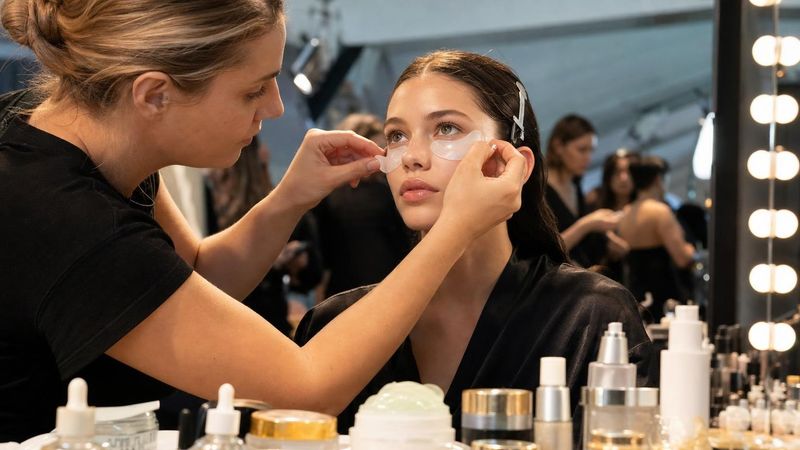
Then come the patches. Born in the 1990s as offshoots of Japanese sheet masks, they now have their own market, valued near 818 million dollars in 2025 and expected to reach about 1.7 billion dollars by 2035. Hydrogel formats hold the largest share, while single-use sachets represent a bit more than 60 percent of packaging. Those sachets are not just cute: they drive margins and make sampling easy, perfect for travel retail, spas and subscription boxes.
Economically, the model is attractive. A small jar or tube, often between 10 and 20 ml, can retail from 20 to 45 dollars in the mid-market and much higher in luxury, with gross margins commonly sitting between 50 and 65 percent. Most consumers repurchase every 2 to 3 months, which suits auto-refill programs and “eye routine” bundles that include cream, serum and patches in a single click.
From backstage essential to high-tech eye ritual
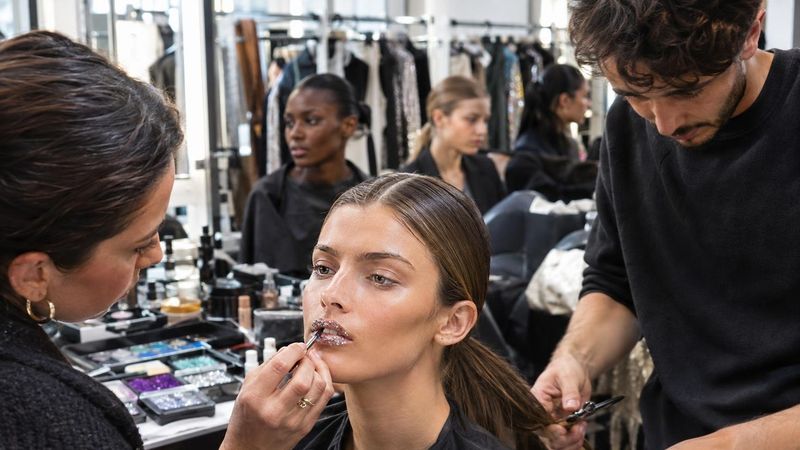
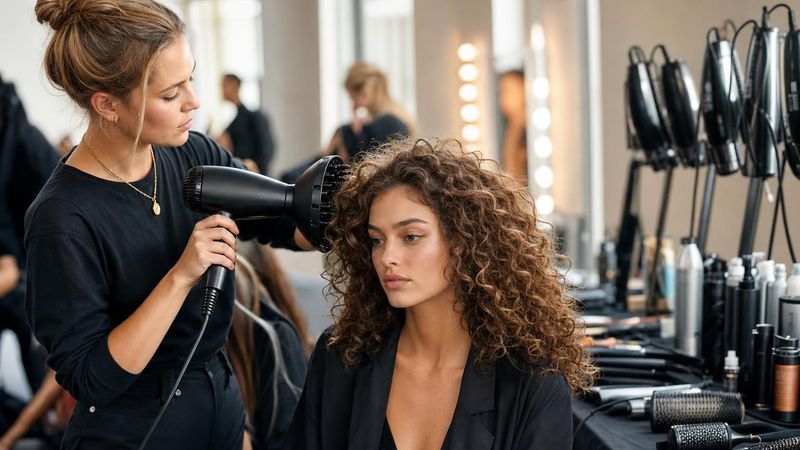
If you have ever peeked backstage at a show or beauty campaign, you have seen the under-eye prep in action. While hair is being done and nails polished, makeup artists slide cooling patches under almost every pair of eyes. Caffeinated gels, de-puffing roll-ons and lightweight creams go on early so concealer can sit smoothly later, even under harsh runway lights or 4K cameras.
What started as simple soaked fabrics has evolved fast. Biocellulose and hydrogel patches hug the skin and hold liquid formulas in place. Reusable silicone masks are now layered over a favorite eye cream to boost penetration and prevent evaporation. At home, sonic or LED devices specifically designed for the orbital area promise spa-like “non-invasive eye treatments” without touching injectables, always paired with a dedicated serum to lock in the routine.
On the formula side, the grid is almost standardized. Caffeine targets puffiness and micro-circulation. Hyaluronic acid and glycerin address dehydration lines. Peptides and gentle retinoid derivatives go after wrinkles. Vitamins C and K, plus niacinamide, are drafted to brighten. Texture is just as strategic: gels that sink in fast under makeup for day, richer balms or overnight masks for long-haul flights and late-night shoots.
On film sets, this choreography becomes a survival tool. Actors can spend 12 or 16 hours under hot lights, with constant touch-ups. Teams layer soothing masks, occlusive balms and brightening creams so the under-eye area looks fresh from the first close-up to the last, a level of performance that has even been recognized by major makeup awards.
Marketing the gaze: luxury, social media and the minimalist revolt
While the science plays in the background, the gaze itself has become marketing gold. Gucci Beauty, for example, recently extended its collaboration with NewJeans singer Hanni by naming her global beauty ambassador. Campaign images highlight the brand’s eye palette and its Stylo Contour des Yeux eyeliner framing her eyes with surgical precision. In an Instagram statement, the house said she embodies authenticity, confidence and charisma, tying a technical eye product to a pop icon’s face and justifying prestige prices with pure image power.
Further down the price ladder, under-eye care thrives on platforms where everything is visual. Hydrogel patches in metallic gold or holographic finishes have turned into content in their own right on TikTok and Reels. Creators chat about their day while wearing them, then cut to dramatic before-and-after shots of dark circles. On Amazon and TikTok Shop, caffeine gels and “de-puffing” sticks often climb the rankings in a matter of days, boosted by impulse buys and low entry prices. In France, the phrase soin contour des yeux now anchors entire sections in pharmacies and parapharmacies, reassuring ingredient-conscious shoppers who prefer clinical claims over viral trends.
At the same time, not everyone is convinced they need yet another step. Online skincare communities are full of debates about whether a separate eye cream is truly necessary or just moisturizer in a smaller, more expensive tube. Many users only see the point when formulas contain specific actives their regular cream does not, or when they have very sensitive eyelids that need a perfume-free, ultra-gentle texture.
That skepticism has opened space for contrarian brands. On the island of Ouessant off the coast of Brittany, veterinarian-turned-formulator Guy Potier built Nividiskin on the opposite idea: one multi-use balm instead of a dozen targeted products. He explains that on the island, people do not “bother with the superfluous” and that philosophy guided the lab to keep only “pure efficacy.” The brand’s Baume Tempête, powered by fucans extracted from brown algae, is marketed to do everything from eye contour to heels. There is no dedicated eye serum, no special cream for every zone.
The numbers show this radical simplicity can work. More than a decade after launch, Nividiskin recorded growth of 33 percent one year, then 50 percent the next, selling around 25,000 tubes for about 320,000 euros in revenue. The balm is now stocked in roughly 500 points of sale across more than 11 countries and has even been used on the skins of Demi Moore and Margaret Qualley for the Oscar and BAFTA-winning makeup of the film The Substance. Associate Catherine Gaillarde describes how the science of brown algae and the need for a universal product for weather-beaten skin naturally converged into this single formula.
For models and beauty fans, all of this means the under-eye category offers both temptation and choice. On one side sits the highly segmented routine, with a brightening serum for the morning, a repairing cream for night and patches before every major event. On the other lies the minimalist route, trusting one well-formulated balm to handle everything. Understanding how much business thinking sits behind each tiny tube can help you decide where you want to land, whether you are prepping for a casting, a shoot or just Monday morning.